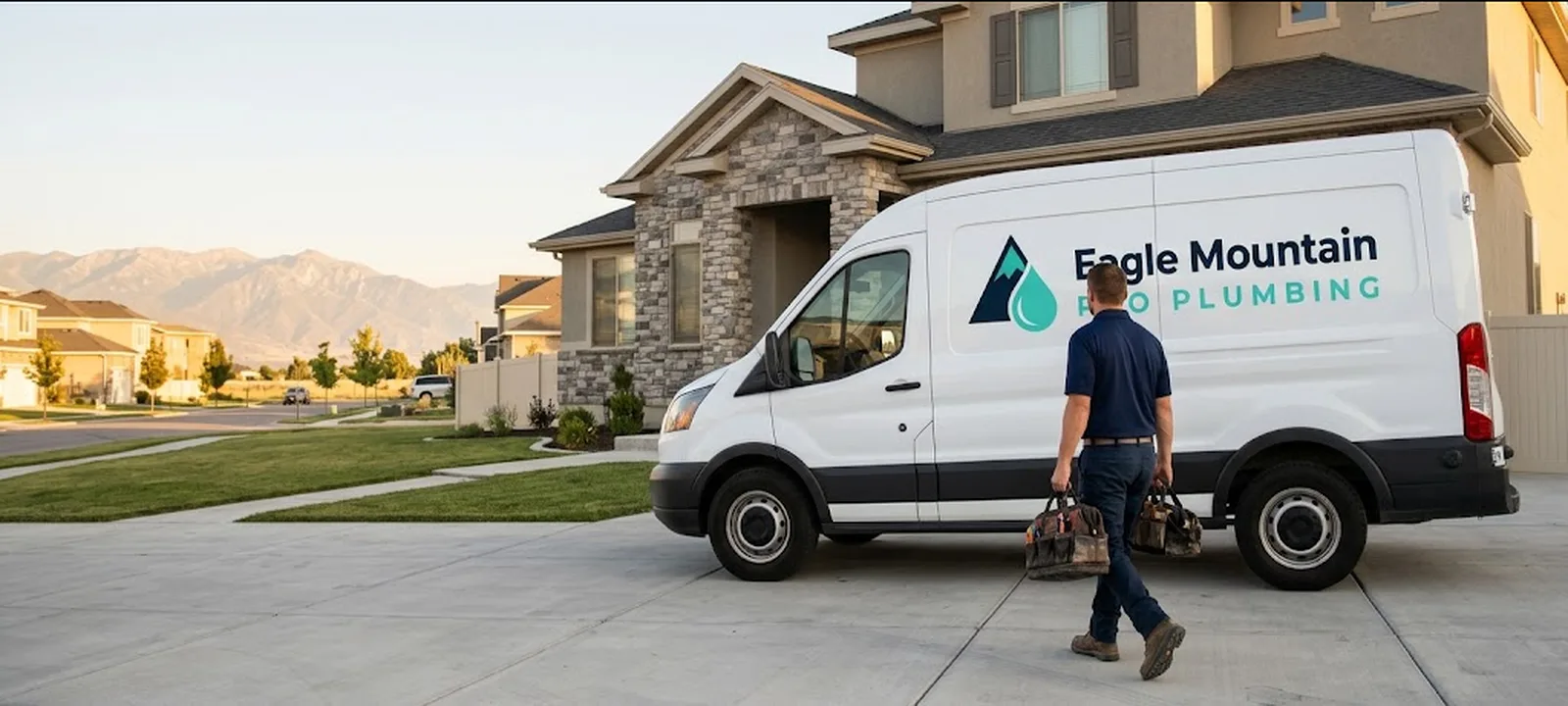
What counts as a plumbing emergency in Eagle Mountain
A plumbing emergency is any problem that is damaging your home right now or putting your family at risk. A pipe spraying water, a toilet overflowing with sewage and a water heater leaking from the tank all qualify. So does a sewer backup that shows up in a floor drain or a tub.
Call an emergency plumber when you cannot stop the water, when sewage reaches living space, or when the heat and hot water both fail in freezing weather. If you smell gas, leave the building first and call 911 or the gas utility. Phone us for the plumbing side once everyone is safe.
A slow drain, a dripping faucet or a toilet that runs after flushing can usually wait for a same-day or next-day visit. Close that fixture's supply valve if it helps and keep using the rest of the house. Phone the dispatch line if you cannot tell which group your problem falls into.
Emergency or can it wait: a quick decision table
Use this table when you are unsure how fast to act. When a row says emergency, make the call before you start cleanup.
| What you see | Treat it as | What to do first |
|---|---|---|
| Pipe spraying or water pouring through a ceiling | Emergency | Close the main valve, cut power to wet areas, then call |
| Sewage coming up a floor drain or tub | Emergency | Stop all water use, keep people out of the room, then call |
| Water heater leaking from the tank base | Emergency | Turn off its power or gas and its cold supply valve, then call |
| No hot water and the tank is dry | Same day | Check the breaker or pilot light, then call if it stays cold |
| Meter still moving with every fixture off | Same day | Test each toilet tank with dye, then call |
| Slow kitchen drain that keeps coming back | Planned visit | Skip chemical cleaners and book a cable or jetting visit |
Eagle Mountain homes, roads and how we reach you
Eagle Mountain sits in Cedar Valley at the western and northern base of the Lake Mountains, at roughly 4,900 feet. Utah winters bring hard freezes at that elevation, so hose bibs, garage lines and attic supply pipes are the first to split. Drain and shut off outdoor spigots before the first cold snap.
The city incorporated in 1996 and passed 35,000 residents in a little over 20 years, so most houses date from the late 1990s or later. Expect copper, PEX and PVC far more often than old galvanized or cast iron. Problems usually center on water heaters, fixtures and original parts reaching the end of their life.
We dispatch from 3500 E Ruby Ln and serve The Ranches in the northeast, City Center on the southwest side, White Hills, Pole Canyon and Harvest Haven. SR-73, Eagle Mountain Boulevard and Ranches Parkway are the main routes. Give the dispatcher a cross street or a landmark such as Ranches Crossing or Porters Crossing so the plumber finds your door quickly.
Drinking water comes from the Eagle Mountain City Water Department, which draws on five groundwater wells plus surface water from the Central Utah Water Conservancy District. The city's annual drinking water quality report publishes no hardness figure. Test your tap before you buy a softener, and ask the Water Department for its report.
Meter still running, no hot water, slow drain back again
Most calls start with a symptom, not a part name. A meter that keeps moving when every tap is off points to a hidden leak, often a running toilet, a stuck irrigation valve or a pinhole on the line into the house. Drop food coloring in each toilet tank and wait without flushing to catch the quiet ones.
Hot water that runs out after a few minutes usually means a failed heating element, a bad thermostat or sediment in the tank. Hot water that never arrives can be a tripped breaker, a pilot that blew out or a failed gas valve. Describe the pattern on the phone and the dispatcher can plan the parts.
A slow drain that keeps coming back is a different problem. Chemical cleaners punch a hole through the clog and leave the buildup on the pipe wall. Repeat clogs usually need cabling or full-line jetting, which is why drain cleaning and hydro jetting are separate services.
While you wait: stop the water and protect the house
Your first five minutes decide how much damage the water does. Work through these steps while the dispatcher sends a plumber.
- Close the main shutoff valve, often near the water heater or where the line enters the garage or basement.
- Switch off power to wet rooms at the breaker panel, but only if you can reach it without standing in water.
- Open the lowest cold faucet to bleed pressure once the main is closed.
- Move rugs, electronics and boxes out of the wet area.
- Take photos of the damage for your insurance company before you clean up.
How to check a plumber's Utah license before work starts
The Utah Division of Professional Licensing (DOPL) issues plumber licenses in five classes: Apprentice, Journeyman, Residential Journeyman, Master and Residential Master. Ask any plumber at your door which class they hold and for the license number. Then search it yourself in the Verify a License lookup.
The search shows the name, class and status on record. Match the name to the person at your door and the company on the truck. A plumber who will not give a license number is one to skip, whatever the price.
Work is built to the Utah-adopted International Plumbing Code. The city's permit sheet lists water supply piping, drain-waste-vent systems, sewer connections, water heaters and major repairs, unless specifically exempted. Permit rules vary, so ask the Eagle Mountain Building Department at 801-789-6614.
What to have ready when you phone (385) 488-1892
A few details let the dispatcher choose the right truck and parts.
- Your street address and the nearest cross street
- Where the water or sewage is showing up
- Whether you found and closed the main shutoff valve
- A callback number that you will answer
- Whether anyone smelled gas or saw sparks near water
- Photos of the leak or the water heater label, if safe to take
- Gate or door codes for access
Yard leaks, sewer lines and the 811 rule
A soggy patch in the yard, a green strip in dry grass or weak pressure at every tap can point to the water service line. Repairs mean digging. Call 811 (Blue Stakes of Utah) before any dig so buried utilities get marked.
We locate the leak first so the trench stays short. For sewer trouble, a camera run shows whether the problem is roots, a belly or a cracked joint, and our sewer line repair page explains the repair options.