Hydro jetting in plain terms
A main drain that backs up at midnight is an emergency. Eagle Mountain Pro Plumbing runs 24/7 dispatch for emergency hydro jetting in Eagle Mountain, UT. Until the plumber arrives, stop using water and leave the toilets unflushed so the line does not fill further.
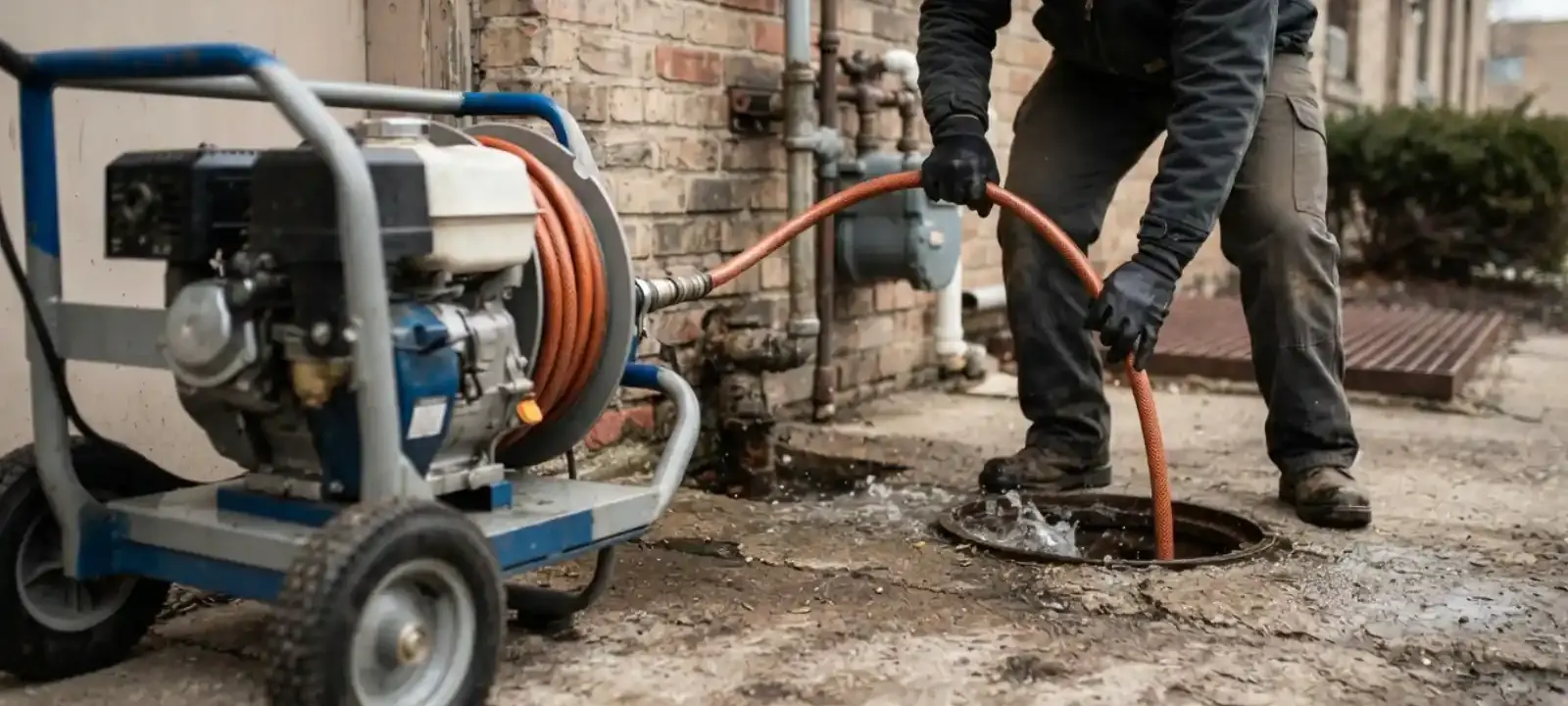
Hydro jetting is the cleaning of a drain or sewer pipe with a high-pressure water stream from a nozzle on a flexible hose. The water cuts grease, sludge and root hairs off the pipe wall and flushes them downstream. It is a deeper clean than a cable, which only opens a channel.
Snake got stuck, or the clog returns in weeks?
People describe this problem in plain terms. The drain clears for a month and then slows again, a cable bounced off something, or a plumber said the pipe is full of buildup. Those are the usual signs that a cable opened a hole in the clog and left the rest behind.
A snake that gets stuck often hit a mass of roots, a heavy grease plug or a shifted joint. We run a camera first, because the right fix depends on which one it is. If the pipe is sound, jetting clears the whole run, and our drain cleaning page shows how a cable visit differs.
Clog back again?
Call (385) 488-1892 and tell dispatch how often it returns.
Where a cable stops and a jet takes over
Cable machine
- Cuts a hole through the blockage
- Fits a fresh clog in a small line
- Leaves a film on the pipe wall
- Can snag or stall on roots
Hydro jet
- Washes the whole circle of the pipe
- Reaches grease that a cable skims past
- Uses flowing water to carry debris out
- Needs sound pipe and a clear entry point
How a hydro jetting visit runs
Camera look
We push a camera head through the cleanout to see the clog, the pipe material, and any cracks, offsets or sags.
Set up and protect
We seat the hose in the cleanout, cover the floor around it, and set pressure so a weak spot is not stressed.
Jet in passes
The nozzle pulls itself forward with rear-facing jets and scours the wall as it goes. We pull back slowly to flush the debris out.
Second camera pass
A final video run shows the wall, confirms the flow, and records what remains, so you see the result on screen.
When a backed-up main line needs jetting right away
If wastewater is coming up in a tub, floor drain or toilet, the main line is blocked, and jetting may clear it best. A hydro jetting visit can be same-day when the schedule allows, including after hours. For a simple main line clog, sewer line cleaning explains the cable route.
Do these things while you wait.
- Stop all water use, including the washer and dishwasher.
- Leave toilets unflushed, and keep children and pets out of the wet area.
- Do not pour in chemical cleaners. They sit in standing water and burn skin.
- Find the main cleanout, but leave the cap on if the line is full.
- Move belongings off the floor near the lowest drain.
- Photograph the backup for your records and your insurer.
Pipe condition decides whether jetting is safe
A jet is powerful, so the camera findings tell us whether it helps or harms.
| Camera shows | Jet it? | Better plan |
|---|---|---|
| Grease coating in sound plastic pipe | Yes | Jet, then recheck by camera |
| Root hairs at a joint | Yes, with a cutting nozzle | Jet, then repair the joint if it stays open |
| Cracked or offset pipe | Not at full pressure | Repair that section first |
| Collapsed or crushed pipe | No | Excavate or reline after cleaning |
| Belly (sag) holding water | Partly | Jet to clear, then plan a fix for the sag |
Why jet pressure is not the only number
Pressure gets the headlines, but flow rate and nozzle choice do much of the work. Residential jetters often run at a few thousand PSI, and the plumber lowers the setting for thin or weak pipe. A forward nozzle punches into a plug, while a rotating nozzle with several jets scours the wall.
Flow carries the loosened debris away, so water volume matters as much as force. That is why a pass starts at the cleanout and works toward the street. The aim is to push waste downstream, not leave it in a pile.
What a jet pass takes out of the pipe
Jetting suits buildup that clings to the wall. These four types account for most repeat calls.
Grease and soap
Kitchen fat hardens into a waxy layer that narrows the pipe. Water at pressure lifts it off the wall.
Roots
Fine root hairs push into joints. A rotating nozzle cuts them back, though an open joint still needs a repair.
Sludge and silt
Slow, flat pipes collect a soft layer that a cable slides through. A jet flushes it out of the low spots.
Hard crust
Crusty buildup can narrow a pipe over time. A scouring nozzle removes loose layers, but a very thick crust may point to a repair.
Hydro jetting questions from Eagle Mountain homes
Most homes here were built after the late 1990s, so sewer pipe is usually newer. Jetting in Eagle Mountain is therefore often about grease, wipes and early root growth, not rusted iron. A camera tells us which one you have.
Dispatch also reaches over to Saratoga Springs, which is an estimated 10 miles down Pony Express Parkway, so one call covers both ends of the road.
Call 811 (Blue Stakes of Utah) before any digging. That matters if the camera shows a pipe that needs excavation after the jet pass.
What drives the price of hydro jetting
Jetting is priced by the job, not a flat menu. We explain each driver after the camera look so you know why the number lands where it does.
Some homeowner policies cover sudden backup damage while excluding slow buildup, and the terms differ by company, so check your policy or ask your agent. Cleaning a pipe is maintenance, but permit rules vary, so ask the Eagle Mountain Building Department.
Want your real number? Call (385) 488-1892 and ask for the clear price up front.
Aftercare and a repeat-clog plan
Jetting returns the pipe to bare wall. These habits keep it that way.
- Ask for the final camera video and keep it with your home records.
- Write down the date, so you can tell if the clog returns in weeks or months.
- Keep cooking fat, coffee grounds and wipes out of every drain.
- Photograph the cleanout and note its location, so any plumber finds it fast.
- If roots were found, ask about a repair plan, since jetting cuts roots but does not seal joints.
- Book a camera follow-up if water slows again.
Questions about hydro jetting in Eagle Mountain
Do you handle hydro jetting emergencies at night or on weekends in Eagle Mountain?
Yes. Dispatch is open 24/7, and a same-day visit is possible when the schedule allows. If sewage is backing up at night, stop water use and call (385) 488-1892 so a licensed and insured plumber can be booked.
My plumber's snake got stuck. Does that mean I need jetting?
Not always. A stuck snake can mean roots, a heavy plug or a broken joint, and jetting only suits the first two. A camera look shows which one it is before any high-pressure water goes in.
Why does the clog come back a few weeks after a cable clears it?
A cable cuts a channel and leaves the coating on the wall. New grease and wipes catch on that coating and rebuild the plug. Jetting removes the coating, so the pipe starts clean.
Will hydro jetting damage my pipes?
On sound plastic pipe with the pressure set correctly, it does not. Old, cracked or offset pipe can be damaged, which is why we run a camera first and adjust pressure to the pipe. If we find damage, we explain it before work continues.
How is jetting different from a basic drain cleaning visit?
A basic cleaning uses a cable to open a clog. Jetting uses water to scrub the pipe wall and flush debris, so it suits repeat clogs, grease and roots. Many visits begin with a cable and move to a jet if the camera calls for it.
Can jetting stop tree roots for good?
No. A jet cuts roots back, and they can regrow if a joint is open. A joint repair or a pipe lining closes the entry, as described under sewer line repair. Trees planted in recent neighborhoods may not have reached the line yet.
Do I need a permit for hydro jetting?
Cleaning a pipe is maintenance and often exempt. A repair that follows may need one. Ask the Eagle Mountain Building Department at 801-789-6614, since rules vary.
Where the rules come from
Utah plumbers work to the International Plumbing Code as the state adopts it, and each city decides how its permits apply. Before a job that touches supply piping, drains, gas or a water heater, confirm the permit question with the people who enforce it.