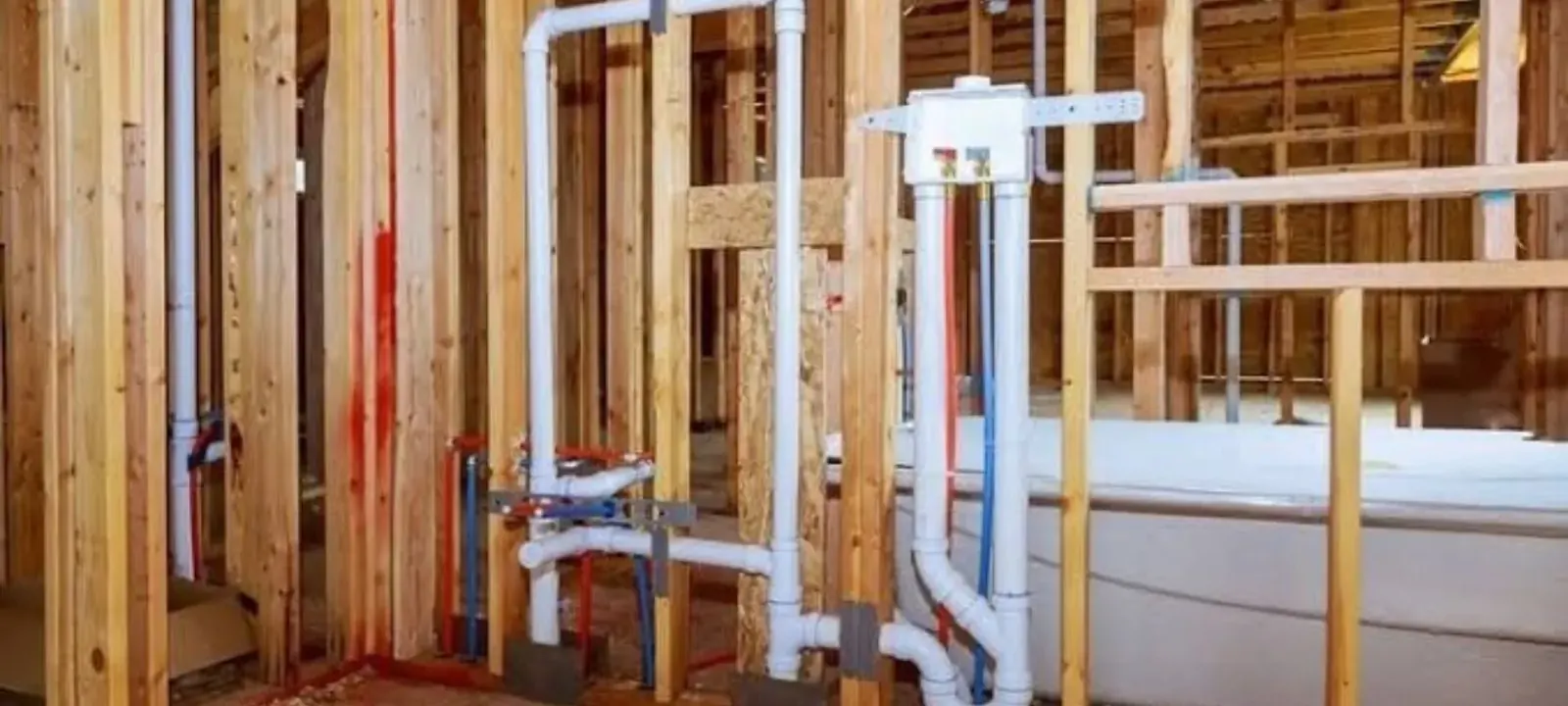
Planned plumbing installs from the rough-in to the last fixture
Plumbing installation in Eagle Mountain, UT covers new fixtures, remodel plumbing, new construction rough-in and gas piping, all done to the Utah-adopted International Plumbing Code. We serve Eagle Mountain and nearby towns, and same-day appointments are offered when available for walkthroughs. Every job gets a clear price before work starts.
Plumbing installation means connecting water supply, drain, vent and gas lines to a fixture or appliance so it works safely and passes inspection. Done right, the work behind the wall matters as much as the fixture you see.
Smell gas? Leave the building first
If you smell gas, a rotten egg odor or hear a hiss near a gas line, leave the building right away. Do not turn lights on or off, do not use a flame or a phone inside, and do not try to find the source.
From outside, call 911 or your gas utility before you call a plumber. We cannot promise a response time for a gas smell, because the utility and fire department are the right first responders and they have the tools to make the building safe.
After the gas is shut off and the utility says the building is clear, we can inspect, repair or install gas piping. Gas line work requires a permit and a pressure test.
Have a plan or just an idea?
Describe the fixtures and the room and we will explain what the install involves.
New construction plumbing: rough-in, top-out and final
In a new house, plumbing happens in stages. Rough-in sets drain, waste and vent pipes, supply lines and stub-outs before walls close. A pressure test and inspection follow, and the final stage installs fixtures and appliances once finishes are done.
Eagle Mountain has grown from a small town in the 1990s into a large city, and new homes keep going up. If you are a builder or an owner-builder, bring the plan set and we will confirm fixture counts, pipe sizes and venting before the first cut.
Sinks, tubs, toilets and appliances we set
Fixtures look simple. Supply, drain and venting all have to be right behind the wall.
Kitchen sink and faucet
Supply stops, a proper trap and a drain tied into the vent system.
Toilets and bidets
A level flange, a new wax or rubber seal and correct supply hookups.
Showers and tubs
Valve rough-in at the right depth, a sound drain and a tested pan or liner.
Washer and dishwasher hookups
Supply, drain standpipe or air gap and shutoff valves.
Water heater connections
Expansion control, relief piping and a sound connection to venting or power.
Outdoor bibs and utility sinks
Frost-resistant bibs and drains that will not freeze and split.
Which installs need a permit and an inspection
The city permit sheet guides this, and exemptions exist for minor work. Ask before you assume either way.
| Type of work | Permit question | Why it matters |
|---|---|---|
| Replace a faucet or toilet in the same place | Often exempt as ordinary maintenance | Confirm with the Building Department |
| Add or move a fixture | Fixture additions and relocations are listed | New drains and vents must be inspected |
| New water supply piping | Listed on the permit sheet | Inspection protects against hidden leaks |
| Drain, waste and vent changes | Listed on the permit sheet | Wrong slope or venting causes slow drains |
| New gas piping, extension or meter work | Listed on the permit sheet | Gas work needs testing before use |
| Water heater | Listed on the permit sheet | Venting and relief piping are safety items |
How a typical fixture install goes
Review the plan and the wall
We check what is behind the wall, what the fixture needs and whether the existing lines can support it.
Price it and sort out the permit
You get a clear price before work starts, and we flag any permit your project needs.
Rough in and test
Supply, drain and vent lines are run, pressure tested and inspected where required.
Set fixtures and verify
Fixtures are mounted, connected and tested for leaks, drainage and hot and cold orientation.
Remodels where the plumbing has to follow the design
A remodel changes where water, drains and vents need to go. Moving a toilet a few feet may require a new drain path and a vent change. Adding an island sink means running a drain across a floor with the right slope.
We review the design with you before demo so the cabinet maker and tile setter work to the right dimensions. If your new layout reveals leaking or tired supply lines, we can discuss repiping while walls are open, and our water heater installation work can happen in the same project.
Eagle Mountain permits, code and utility contacts
The city Building Department at 3267 E Campus Dr, Suite H, can be reached at 801-789-6614. Its permit sheet lists water supply piping, drain-waste-vent systems, sewer connections, water heaters, major plumbing repairs, fixture additions and relocations and new gas piping, extensions and meter work, unless specifically exempted.
Permit rules vary, so ask the Eagle Mountain Building Department before starting. Call 811 before any trenching for a new line, and see plumbing in Saratoga Springs if your project sits across the line in that city, which has its own city office.
What shapes the price of an install
Installing one faucet and plumbing a new bathroom are not comparable jobs. These factors explain the difference.
Installations are usually paid out of pocket, and insurance rarely covers planned upgrades. Permit rules vary, so ask the Eagle Mountain Building Department.
Want your real number? Call (385) 488-1892 and describe the job.
Get ready for your install day
A little prep keeps the job on schedule. It also keeps surprises small.
- Confirm the fixture model and any spec sheets before the visit
- Clear the work area and the path to the water shutoff
- Locate your main valve and test it
- Ask about permit and inspection timing
- Verify the plumber's license with DOPL
- Tell us if anyone in the house depends on water during the day
Questions about plumbing installation in Eagle Mountain
What should I do if I smell gas?
Leave the building at once and call 911 or your gas utility from outside. Do not use switches, flames or phones indoors. A plumber comes after the utility has made the building safe.
Can you promise how fast you will respond to a gas smell?
No. The utility and the fire department are the first responders for a gas smell. We repair or install gas piping once the area is safe.
Do I need a permit to install a new faucet or toilet?
Replacing in the same location is often treated as ordinary maintenance, but permit rules vary. Ask the Eagle Mountain Building Department at 801-789-6614.
Do new construction homes need plumbing inspections?
Yes, in stages. Rough-in plumbing is tested and inspected before walls close, and the final inspection follows fixture installation.
Can you move a toilet or add a sink to my layout?
Usually yes, but it affects drains and vents. We check slope, vent size and access before agreeing to a layout.
Does installing a gas appliance need more than a connection?
Yes. Gas piping needs sized lines, a leak test and often a permit. See water heater installation for gas-fired tank requirements.
How do I check my plumber's license?
Use the Verify a License lookup from the Utah Division of Professional Licensing. It lists apprentice, journeyman, residential journeyman, master and residential master licenses.
Where the rules come from
Utah plumbers work to the International Plumbing Code as the state adopts it, and each city decides how its permits apply. Before a job that touches supply piping, drains, gas or a water heater, confirm the permit question with the people who enforce it.