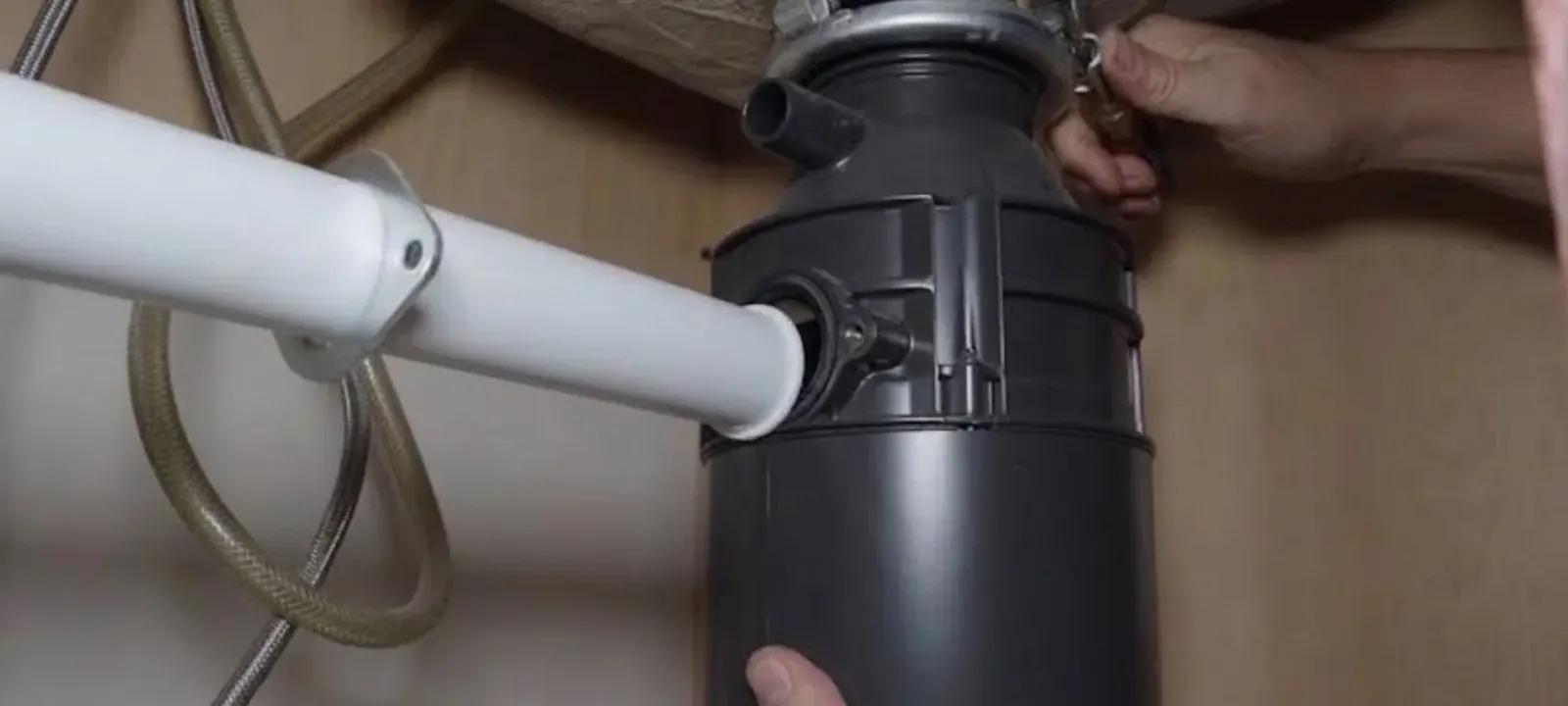
A handy homeowner can often swap one garbage disposal for a similar model in an afternoon. A first-time install in a sink that never had one is a different job. It adds electrical work, a dishwasher connection, and sometimes drain changes.
Choose DIY when the old unit mounts the same way, power is already under the sink, and you can shut off the breaker with confidence. Hire a plumber when wiring is missing, the drain layout must change, or a leak shows up after you finish. The table and steps below help you sort your own sink.
Which disposal jobs fit a DIY weekend and which do not
Match your sink to the closest row. If you land in the last two rows, plan on professional help.
| Your situation | DIY fit | Why |
|---|---|---|
| Replacing a unit with the same mount style | Good | The flange, power, and drain connections already exist |
| Swapping to a bigger horsepower motor | Fair | Check cabinet clearance, the outlet, and the trap alignment first |
| First disposal in a sink with an outlet under it | Fair | You add a mount, a drain connection, and a dishwasher link |
| No outlet or switch for the disposal | Poor | Wiring should be done by someone qualified for electrical work |
| Drain or trap must be moved or rebuilt | Poor | Misaligned drains leak and invite clogs |
DIY install versus hiring a plumber
DIY route
- You control the schedule and pick the unit
- Works best for a like-for-like swap
- You own any leak, wiring, or alignment mistake
- You need basic hand tools and a careful hour for the breaker and wiring
Plumber route
- The drain, trap, and dishwasher link are checked as one system
- Wiring and outlet questions get solved on the spot
- Permit questions are easier to sort out
- A leak after the install is the plumber's problem to fix
What a standard DIY disposal swap looks like
Kill the power and clear the cabinet
Turn off the breaker, not just the wall switch, and test the cord or wires with a voltage tester. Empty the cabinet so you can see the whole sink drain.
Remove the old unit
Disconnect the drain pipe and the dishwasher hose, then twist off the mounting ring. Clean the flange and the old putty from the sink opening.
Mount the new unit and connect the drains
Seat the sink flange with a bead of plumber's putty, attach the mounting ring, and hang the unit. Reconnect the discharge pipe and the dishwasher hose, and knock out the dishwasher plug if the unit has one.
Restore power and test for leaks
Wire or plug in the unit, restore the breaker, and run water into the disposal for a minute. Feel along every joint with a dry paper towel and check again after an hour.
The small plastic plug that floods the dishwasher
Most new disposals ship with a thin plastic knockout plug inside the dishwasher inlet. If you leave it in, the dishwasher cannot drain through the disposal, and dirty water backs up into the machine. A screwdriver and a light tap clear it, and you should fish the plug out of the chamber afterward.
The dishwasher drain hose also needs a proper high loop or an air gap so wastewater cannot flow backward. Ask the Eagle Mountain Building Department which method it expects.
Want a plumber to look at it?
Call the 24/7 line and describe what you see. A licensed plumber can tell you the next step.
Eagle Mountain note: a like-for-like swap and a new install may be treated differently
The city's list of work that requires a permit includes fixture additions and relocations, as well as drain-waste-vent systems, unless the work is specifically exempted. Many minor repairs and ordinary maintenance can be exempt.
A straight replacement of an existing disposal is a different job from adding one where none existed. Permit rules vary, so ask the Eagle Mountain Building Department at 801-789-6614 and describe the exact work before you start.
Six DIY mistakes that turn into a plumber call
Most disposal calls we hear about follow one of these errors. Knowing them helps you avoid a second trip to the hardware store.
Forgetting the dishwasher knockout plug
The dishwasher drains slowly or fills the sink. Fixing it means disconnecting the unit again.
Over-tightening the mounting ring
Cranking it too hard can crack the flange seal or warp the unit. Even pressure works better than force.
Skipping the putty or gasket
A dry flange leaks under the sink. The drip stays slow enough to ignore until the cabinet floor swells.
Misaligned trap and discharge pipe
Forcing a pipe into place stresses the joint and leaks later. Cut the pipe to fit instead.
Buying a motor that does not fit the cabinet
Larger units are taller and heavier. Measure the space and check the mounting style before you buy.
Working with the breaker on
A wall switch is not an isolation point. Always shut off the circuit breaker and test for power.
Things to check before you buy a disposal
Ten minutes with a tape measure and a flashlight saves a return trip.
- Measure the clearance from the sink bottom to the cabinet floor
- Note whether the old unit is hardwired or plugs into an outlet
- Check the mounting style, since many sinks use a three-bolt ring
- Find out if the dishwasher hose connects to the disposal
- Look at the trap arm to see where the discharge pipe lands
- Pick a motor size that fits your household's cooking habits
Where wiring decides who does the job
Disposals run on household current, so the electrical side matters as much as the plumbing. A unit with a cord on an outlet under the sink is a simple swap. A hardwired unit with a wall switch is still manageable if the wiring is already in place and you are comfortable working with it.
If there is no power at the sink, adding it is electrical work. Ask the Eagle Mountain Building Department about the rules for new circuits and outlets, and consider hiring someone qualified. Our plumbing installation crews can handle the drain and water side of a new setup while you line up the wiring.
What a disposal can and cannot take once it is in
A new disposal does not make the drain tougher than a normal kitchen line. Grease cools and coats the pipe wall. Fibrous scraps such as celery strings and corn husks wrap around the shredder ring and jam it.
Run cold water before, during, and after use, and feed scraps in small amounts. If a unit jams or leaks repeatedly, a plumber can check whether the fault is the unit or the drain behind it. See the garbage disposal page for repair and replacement help.
The same rules apply in nearby towns, including the homes covered by our Saratoga Springs plumber page.
Questions readers ask
Can I install a garbage disposal myself?
Yes, if the sink already has a disposal or power at the cabinet, and you can shut off the breaker safely. A first-time install with new wiring or drain changes is better left to qualified help.
How long does a disposal installation take?
A like-for-like swap often fits in an afternoon for a careful homeowner. A first install with new connections takes longer, and a plumber has the tools to finish it in one visit.
Why is my dishwasher not draining after I installed a new disposal?
The most common cause is the knockout plug in the dishwasher inlet that was never removed. Disconnect the dishwasher hose, tap the plug out, and fish it from the chamber. Also check the drain hose for kinks and a proper high loop.
What size disposal should I buy?
Motors range from a third of a horsepower up to a full horsepower. Larger motors grind more finely but need more cabinet room and cost more to run. A mid-range unit fits most kitchens with ordinary cooking habits.
Which Eagle Mountain office can confirm if my disposal swap needs a permit?
Call the Eagle Mountain Building Department at 801-789-6614 or visit 3267 E Campus Dr, Suite H. The permit sheet lists fixture additions and relocations, so a new disposal may be treated differently from a straight swap.
Where the rules come from
This guide is general information and does not replace the code. Utah adopts the International Plumbing Code with its own amendments, so use the links below to check a license and to see which jobs Eagle Mountain says need a permit.