To run a toilet leak dye test, put a few drops of food coloring or a dye tablet in the tank, do not flush, and wait 15 minutes. If color shows up in the bowl, water is slipping past the flapper, and you have a silent leak.
Most silent leaks come from a worn flapper, and many homeowners can swap one themselves. A leak that survives a new flapper points to the fill valve or the overflow tube, which is the point to call a plumber in Eagle Mountain, UT.
Why a toilet can leak without making a sound
A toilet tank holds water behind a rubber flapper. When that seal wears, tank water trickles into the bowl and down the drain. The fill valve then refills the tank in short bursts to replace it.
You may never hear a running sound, and nothing drips on the floor. The only clue is a higher water bill or an odd refill hiss every so often. A dye test makes the leak visible.
The dye test, one step at a time
Skip the flush and take the lid off
Set the lid on a towel. Check that the water level sits about an inch below the top of the overflow tube, the vertical pipe in the middle of the tank.
Add the dye
Drop in about ten drops of dark food coloring, or one dye tablet. Blue and red show up well, and yellow is harder to see.
Wait without flushing
Set a timer for 15 minutes. Do not let anyone use the toilet. Resist the urge to stir the tank, because mixing spreads the dye and hides the test.
Look in the bowl
Clear water means the flapper is holding. Color in the bowl means water is passing the seal. Flush when done to clear the dye, and wipe off any stains.
What you saw, what it likely means, what to try
Match your result to this chart before buying parts.
| What you see | Likely cause | First fix to try |
|---|---|---|
| Color in the bowl after 15 minutes | Worn or warped flapper | Replace the flapper and clean the seat |
| Clear bowl, but the tank hisses and refills | Fill valve leak or float set too high | Lower the float or replace the fill valve |
| Water runs into the overflow tube | Water level set too high | Adjust the float so the level sits below the tube top |
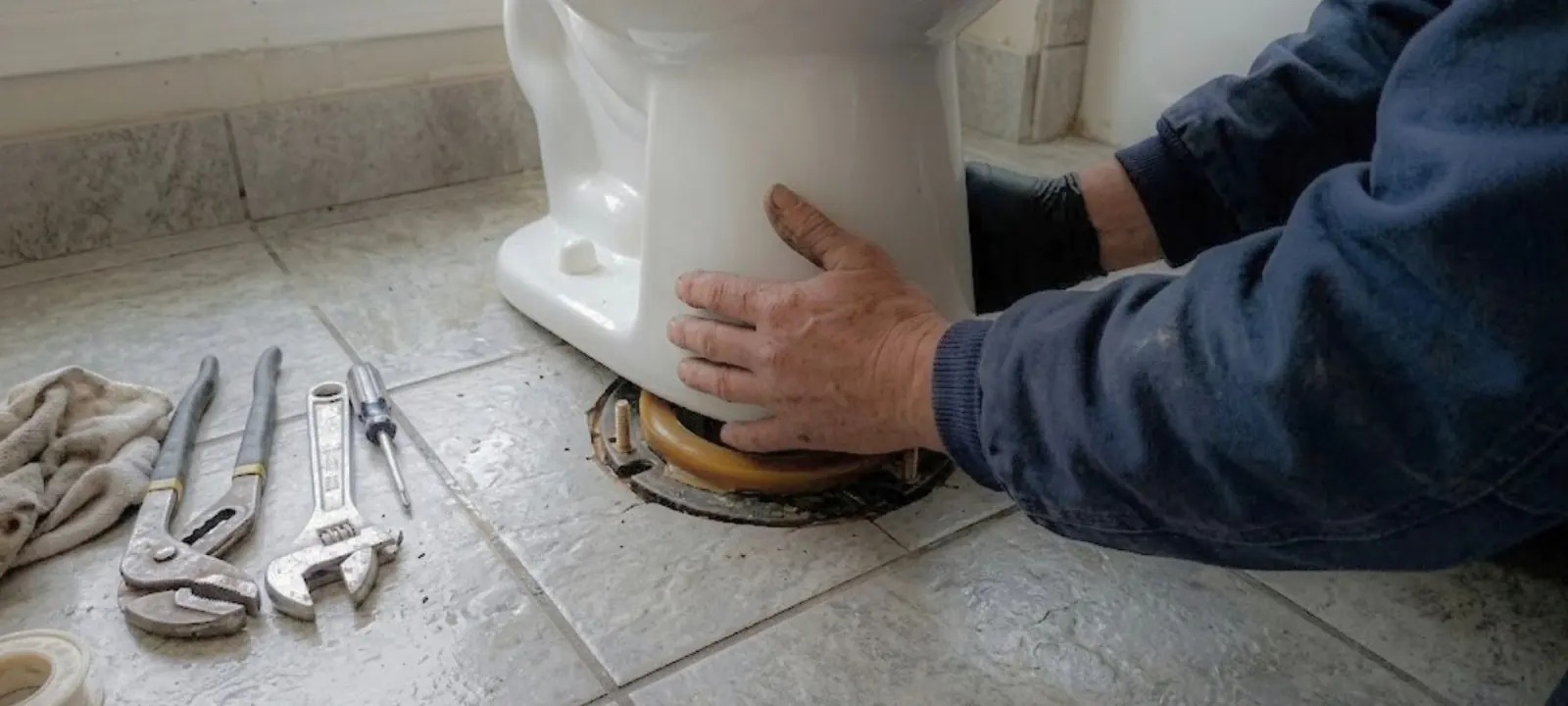
| Clear bowl, wet floor at the base | Failed wax ring or loose closet bolts | Pull the toilet and reset it with a new wax ring |
| Wet floor near the wall | Loose or worn supply line connection | Tighten or replace the supply line |
Meter still running with every fixture off
The dye test only checks the toilet. If your water meter keeps moving after every fixture is off, the leak may be somewhere else. Look at the small dial or triangle on the meter, which spins when any water moves.
Turn off the toilet supply valve and watch the meter again. If the dial stops, the toilet was the leak. If it keeps moving, you may have a different problem, and a plumber who does leak detection can trace it.
Also try the quiet-house check. Listen near the toilet at night when nothing else is running. A faint hiss or a sudden refill gurgle is a strong hint.
Want a plumber to look at it?
Call the 24/7 line and describe what you see. A licensed plumber can tell you the next step.
Eagle Mountain note: read your own meter and water report
Eagle Mountain City's Water Department (1650 E. Stagecoach Run) supplies drinking water from five groundwater wells plus surface water from the Central Utah Water Conservancy District. The city's annual drinking water quality report does not publish a hardness figure, so test your tap if you want to know how mineral buildup might affect flappers and seats.
If a dye test and a meter check both point to a leak you cannot find, ask the Water Department how to read your meter and what its records show. Permit rules vary, so ask the Eagle Mountain Building Department at 801-789-6614 before moving or adding a fixture.
Other tank problems that look like a leak
Not every sound or stain is the flapper. These are the usual look-alikes.
Condensation on the tank
A cold tank sweats in warm, humid air. Wipe it dry and check whether the drips return after the tank sits still for an hour.
Phantom flushing
The toilet refills on its own every few minutes. That is the classic sign of a slow flapper leak.
A rim leak under the tank
Water drips from the bolts that hold the tank to the bowl. Rubber washers on those bolts wear out over time.
A cracked bowl or tank
A hairline crack can weep slowly. Dye will not show it, but a dry paper towel pressed on the surface often will.
Gather these before you start
The test takes minutes, but a small kit saves trips to the store.
- Dark food coloring or a dye tablet
- A towel for the tank lid
- A timer or phone
- Paper towels to check for moisture
- The make and model printed inside the tank
- A flapper that matches your flush valve size
- A small bucket for the old parts
Why one drip adds up
A toilet leak that cannot be heard can still waste a lot of water over a month, because it runs day and night. A fine trickle into the bowl is enough to keep the fill valve cycling. That is why the dye test is worth repeating after any repair, to confirm the new part sealed properly.
Fix it yourself or call a plumber
A homeowner can often handle
- Swapping a flapper
- Adjusting the float height
- Replacing a supply line with a hand-tightened connector
A plumber is the better call
- Leaks that continue after a new flapper and fill valve
- A rocking toilet or water at the base
- Repeated clogs along with leaks
- Any sign of a cracked bowl
After the repair, test again
Repeat the dye test once the new parts are in. Wait the full 15 minutes before you decide the job is done. Check the base for dampness a day later, since a small wax ring leak shows up slowly.
Run the test again in a week. A part that seals on day one can still fail if the seat is pitted or the new flapper chain is too tight. A chain with a little slack, about the width of a pencil, lets the flapper drop fully closed.
If you want a pro to handle the parts, our toilet repair page lists what is covered. If you live closer to Pony Express Parkway and Redwood Road, the Saratoga Springs plumbers page may help.
Questions readers ask
How long should I wait during a toilet dye test?
Wait 15 minutes without flushing. Some leaks are slow, so if the bowl stays clear, wait up to 30 minutes before you call it clean.
Can I use something other than food coloring?
Yes. Dye tablets made for toilets work well, and a few drops of dark liquid dye works too. Avoid products with bleach, since they can harm rubber parts.
The bowl stayed clear but my bill went up. What now?
Check other fixtures, outdoor spigots, and the water heater relief valve. A meter check with every fixture off tells you whether the leak is real.
Does a new flapper always fix the leak?
Not always. A pitted flush valve seat can keep leaking even with a new flapper, and the fill valve may be the real problem.
Can a toilet leak damage the floor?
A leak at the base can soak subfloor over time. Soft flooring, a stain around the toilet, or a rocking bowl are all signs to stop and call.
Who handles a leaking toilet in Eagle Mountain, UT after hours?
A licensed plumber can help when water is on the floor. Shut the supply valve behind the toilet first, then call (385) 488-1892 for dispatch.
Where the rules come from
This guide is general information and does not replace the code. Utah adopts the International Plumbing Code with its own amendments, so use the links below to check a license and to see which jobs Eagle Mountain says need a permit.