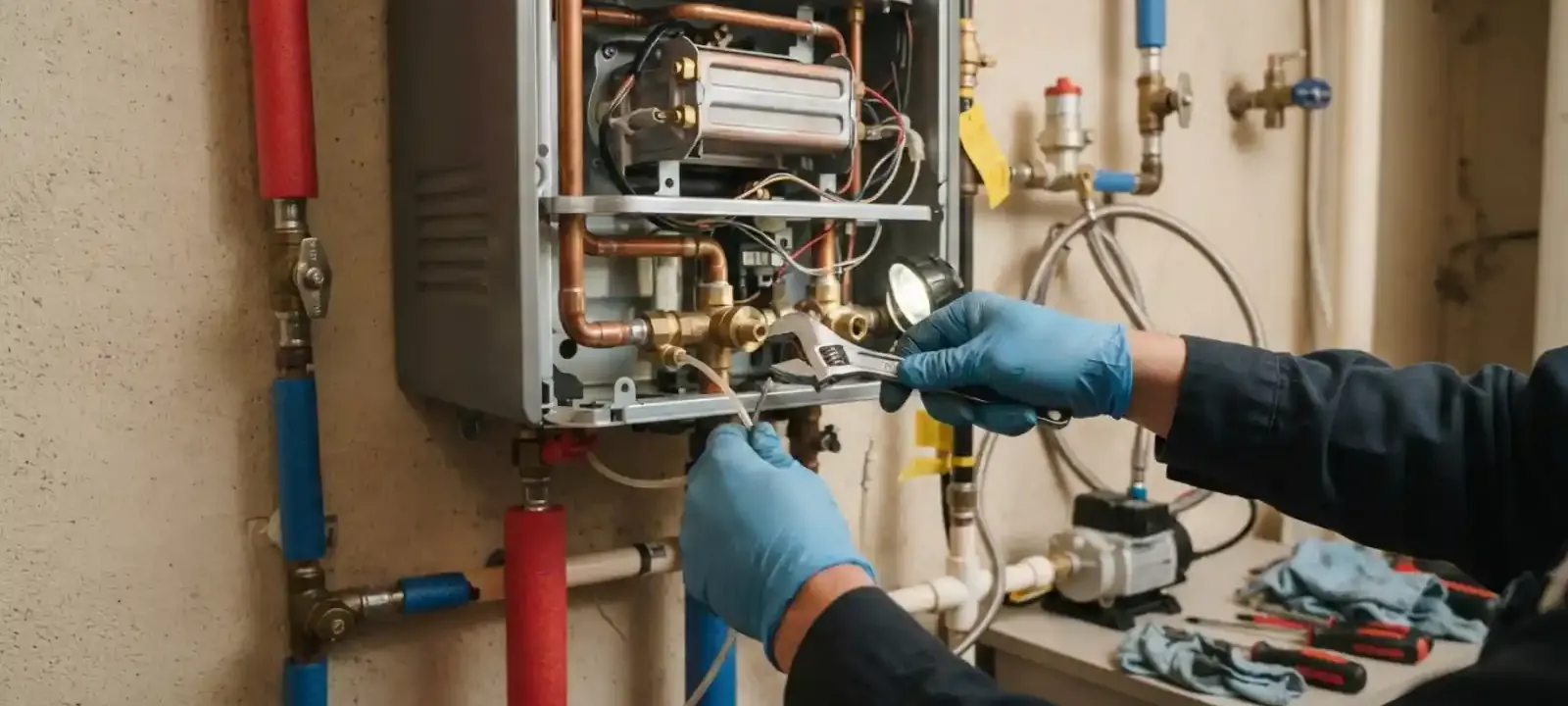
Start a tankless water heater at 120 degrees Fahrenheit. The US Department of Energy calls 120 degrees a temperature considered safe for most of the population. The Consumer Product Safety Commission (CPSC) warns that water at 140 degrees can burn skin after about six seconds of contact.
Raise the setting only if you have a specific reason, such as a fixture that never feels hot enough, and fix that problem at its source when you can. A tankless unit heats water as it flows, so the setting works a little differently than on a tank. The sections below show how to check the real temperature at your tap.
Where the 120 degree number comes from
Two federal sources point at the same figure. The Department of Energy's Energy Saver guide tells homeowners to set the water heater to 120 degrees Fahrenheit. The CPSC publication on tap water scalds says burns occur with a six-second exposure to 140 degree water, and it suggests using the lowest setting that still meets your hot water needs.
That gap of twenty degrees matters more than it sounds. At 120 degrees a brief splash is unpleasant. At 140 degrees the same splash can injure a toddler or an older adult before anyone reacts.
A tankless setpoint is an outlet target, not a tank thermostat
A tank heater holds a batch of water at the thermostat temperature. A tankless unit fires its burner or element only when water moves, and it tries to hit the outlet target you pick. The work it does equals the gap between the cold water coming in and the setpoint you chose, which is called the temperature rise.
When you open many fixtures at once, flow goes up and the unit may fall short of the target. In cold months the incoming water is colder, so the same setpoint demands a bigger rise. That is why a heater can feel perfect in summer and weak in January even when the setting never changed.
Which setting fits which household
Use the table as a starting point and confirm the result with a thermometer at the faucet.
| Household situation | Where to start | Reason |
|---|---|---|
| Typical adults only | 120 degrees | Matches the Department of Energy guidance and keeps scald risk low |
| Young children or older adults | 120 degrees or the lowest setting that works | CPSC advises the lowest setting that meets your needs, because skin burns faster in these groups |
| Dishwasher without a built-in heater | Read the dishwasher manual first | Some dishwashers heat their own water, and others rely on what the heater supplies |
| Far bathroom with a long wait | Keep 120 and fix the delay | A higher setting will not shorten the wait, and it raises the burn risk at every other tap |
| Anything above 120 | Only with a mixing or anti-scald valve | Fixtures can then blend the water down before it reaches skin |
Hot-then-cold swings and other complaints that feel like a bad setting
People often turn the setpoint up when the real trouble sits somewhere else. Match your symptom here before you change the number.
Water turns scalding after a cold stretch
Hot water that sat in the pipe can mix with a fresh surge. Check for an anti-scald valve and test the temperature at the tap.
Hot, then cold, then hot again
A very small draw may not trigger the unit, or a low flow may cause it to shut off. A plumber can check minimum flow and the sensor.
Never gets hot enough with two showers running
The unit may be at capacity for your cold-weather rise. A higher setpoint cannot add heating power the unit does not have.
Temperature drifts or an error code appears
Mineral scale in the heat exchanger or a failing sensor can cause drifting. Write down the code and the model before calling.
Want a plumber to look at it?
Call the 24/7 line and describe what you see. A licensed plumber can tell you the next step.
Eagle Mountain note: know your water before you blame the heater
Eagle Mountain City's Water Department supplies drinking water from five groundwater wells plus surface water from the Central Utah Water Conservancy District. The city's 2025 Annual Drinking Water Quality Report does not publish a hardness figure.
That matters for tankless units because minerals can build up inside the heat exchanger. Test your tap with a hardness strip, and ask the Water Department at 1650 E. Stagecoach Run for its annual drinking water quality report before you size a flush schedule.
How to check and adjust the setting without guessing
Read the current setpoint
Find the controller on the unit or the remote panel and note the number it shows. Some models list preset steps, so check the manual to see what each step means.
Measure at the tap
Run the hot tap for a minute, then hold a kitchen or candy thermometer in the stream. The CPSC also advises hand-testing water before bathing infants and young children.
Change it in small steps
Adjust a few degrees at a time, wait for the unit to settle, and measure again. Large jumps can overshoot and make the water uncomfortable.
Recheck after any service
After a power interruption, a cleaning, or a repair visit, confirm the setpoint is still where you left it.
Scald safety checks for homes with children or older adults
A thermometer costs little and settles arguments about whether the water feels too hot. Run through these checks once, then repeat after any change.
- Test the hot tap with a thermometer and write the result near the unit
- Hand-test bath water before a child gets in
- Ask a plumber about anti-scald valves at the shower and tub
- Teach children to turn on cold water first
- Recheck the setpoint after a power outage or service visit
- Keep the controller out of reach if little hands can change it
Lower setting or higher setting for a tankless unit
Staying near 120 degrees
- Lower burn risk at every faucet
- Slower mineral scale growth inside the heat exchanger
- Less strain on the unit during cold-water months
- Meets the Department of Energy guidance
Going higher
- Can help if a far fixture feels lukewarm
- Needs mixing or anti-scald valves to stay safe
- Raises scald risk if anyone changes valves carelessly
- May mask a flow or sizing problem
When the real fix is a service visit, not a new number
If the water never reaches your setting, scale on the heat exchanger or a blocked inlet filter is a common suspect. A flush clears mineral buildup, and a tankless water heater service visit also checks the vent and the error history.
If the unit repeatedly shuts down or smells of exhaust, treat it like any gas appliance and stop using it until a plumber looks. Our water heater repair crews can sort out whether the fault is a sensor, a vent, or the gas supply.
Homes in nearby towns run into the same cold-month drop. The advice here also fits the homes covered by our Saratoga Springs plumbing page, where the first step is the same thermometer test.
Questions readers ask
Is 120 degrees hot enough for a tankless water heater?
For most households, yes. The Department of Energy calls 120 degrees safe for most of the population, and showers, handwashing, and sinks work well there. If a dishwasher or washer seems to need more, check its manual before you raise the setpoint.
How hot is too hot for tap water?
The CPSC says burns occur with a six-second exposure to 140 degree water. The risk climbs quickly with each added degree, and children and older adults are hurt faster. That is why the lowest comfortable setting is the safest one.
Why does my tankless water heater make hot water that fluctuates?
Fluctuation usually comes from low flow, mineral scale, or a sensor problem rather than a bad setting. Run one fixture at a time to see if the swings stop. If they do not, a plumber should check the unit.
Can I set a tankless heater higher to get more hot water?
No. A higher setpoint raises the temperature, not the volume. If two showers run short, the unit may be too small for your cold-weather conditions, and a plumber can tell you whether a different model fits.
Should I test my water temperature after the first cold snap?
Yes. Utah winters bring hard freezes, and colder incoming water means a bigger temperature rise. A quick thermometer check tells you if the unit still reaches your setpoint at normal flow.
What should I ask the Eagle Mountain Water Department before choosing a tankless heater?
Ask for the annual drinking water quality report and ask which sources feed your street. The report does not give a hardness number, so test your tap yourself. That result tells you how often to plan a descaling flush.
Where the rules come from
This guide is general information and does not replace the code. Utah adopts the International Plumbing Code with its own amendments, so use the links below to check a license and to see which jobs Eagle Mountain says need a permit.