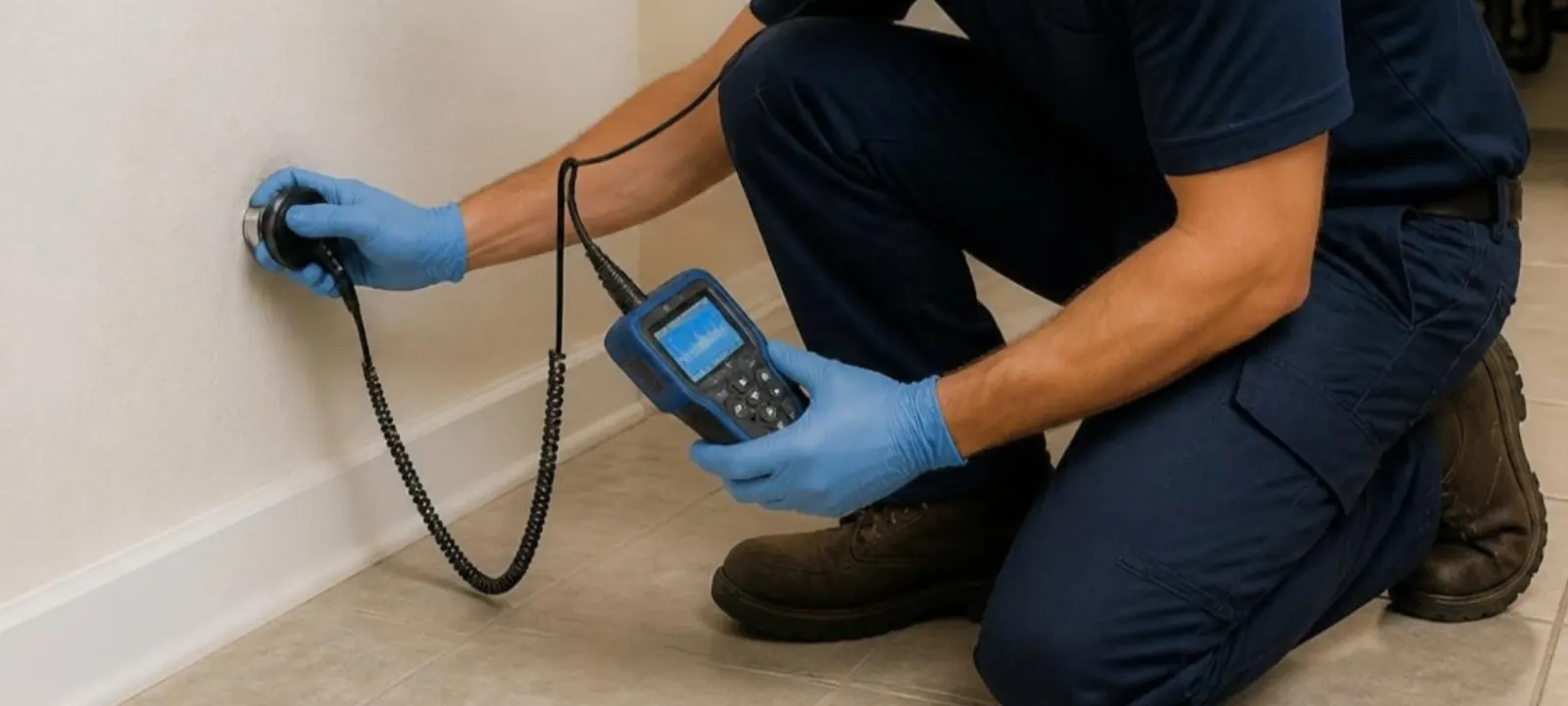
To find a sprinkler system leak, shut off every other water use, read your meter, and wait a few minutes. If the dial moves, check the lawn for soggy patches, sunken ground, or a zone that has weak spray. Then run each zone one at a time and watch for pooling.
A leak before the zone valves is a plumbing problem, and a leak after them is usually a sprinkler repair. Know which side you are on before you dig in Eagle Mountain, UT.
Wet patch in the lawn, but the sprinklers are off
A spot that stays soggy for days is the classic sign. Others include a muddy strip along the sidewalk, grass that grows greener along one line, and a sinkhole near a head. The system may also run low on pressure in the far zone.
These signs tell you a leak exists, not where it is. The steps below narrow it from the whole property to a single zone, then to a few feet of pipe.
Photograph the wet area each day for a few days. A spot that grows after each watering cycle points to a leak that runs only when the zone is on.
A zone by zone search you can do in an afternoon
Do a meter check
Turn off all indoor water and the sprinkler controller. Note the meter reading, wait 15 minutes, and read it again. A moving dial means water is leaving somewhere.
Shut the irrigation supply
Close the valve that feeds the sprinkler system and check the meter again. If the dial stops, the leak is on the irrigation side. If it keeps moving, look at the house plumbing.
Run each zone alone
Use the controller to start one zone at a time. Watch heads for broken spray, geysers, or weak flow, and look for puddles between heads.
Mark and dig carefully
Flag the suspect spot. Call 811 before any digging, since shallow irrigation lines share ground with other utilities.
Symptom, likely location, and who usually fixes it
The location often decides if you need a sprinkler contractor or a plumber. Use the same idea with the meter: if it spins only when irrigation runs, the leak sits after the valves.
| What you see | Likely location | Usually handled by |
|---|---|---|
| Geyser at one head | Broken head or riser | Homeowner or sprinkler contractor |
| Soggy strip between heads | Cracked lateral pipe | Sprinkler contractor |
| Water at the valve box | Failing zone valve or fitting | Sprinkler contractor or plumber |
| Meter moves with irrigation off | Leak on the supply line before the valves | Plumber |
| Low pressure across all zones | Partly closed supply valve or main line leak | Plumber |
Common failure points in an irrigation system
Knowing the weak points saves digging in the wrong place.
A broken backflow preventer is worth taking seriously. It guards the household supply from irrigation water, so a leaking one should be checked by a licensed pro soon.
Sprinkler heads and risers
Mowers, shovels, and car tires crack the plastic. This is the cheapest and most common leak.
Lateral pipe joints
Glued or push-fit joints can separate when soil shifts or roots press on them.
Zone valves
Diaphragms wear, and debris keeps the valve from closing. A weeping valve leaks into the zone even when the controller is off.
Backflow preventer
The device that keeps irrigation water out of the house supply can leak from a worn seal or a freeze crack.
The supply line
The pipe from the house to the valve manifold carries full pressure all day. A leak here shows on the meter and often needs a plumber.
Winterization damage
Water left in pipes can freeze and split fittings. The break shows up in spring when the system starts.
Want a plumber to look at it?
Call the 24/7 line and describe what you see. A licensed plumber can tell you the next step.
Eagle Mountain note: who supplies your water and where to ask
Eagle Mountain City's Water Department (1650 E. Stagecoach Run) supplies drinking water from five groundwater wells plus surface water from the Central Utah Water Conservancy District. We have not verified how irrigation water is supplied to each neighborhood, so ask the Water Department if your lot uses culinary water or another source for sprinklers.
That answer affects which meter you read and which valve you shut off. It also tells you who to call about a leak on the city side. Call 811 before you dig, and ask the Eagle Mountain Building Department at 801-789-6614 about permit rules if you plan to replace a supply line. Permit rules vary.
Why the pressure drop tells you where to look
A leak after the zone valves only loses water while that zone runs, so only that zone's pressure falls. A leak before the valves loses water all the time, so every zone's pressure falls and the meter keeps moving. That difference narrows the search before you pick up a shovel.
Try it on a quiet evening with a notebook. Run one zone, note the spray at the farthest head, and repeat for each zone. The zone that looks weak is the one to dig near.
Spring start-up checks that catch leaks early
Utah winters bring hard freezes, so the first run of the season is the best time to look.
- Open the supply valve slowly to avoid a pressure surge
- Run each zone and walk the lines
- Check heads for cracks and clogged nozzles
- Look inside valve boxes for standing water
- Check the backflow preventer for drips
- Read the meter before and after a short run
- Write down any weak zones for the repair visit
- Check the controller battery and clock after any power loss
- Set a reminder to winterize again before the first hard freeze
Homeowner fix versus calling a pro
Often a do-it-yourself fix
- Replacing a broken head
- Cleaning a clogged nozzle
- Resetting a controller schedule
- Re-aiming a head that sprays the sidewalk
Better for a pro
- Leaks on the supply line
- Failing zone valves or a backflow device
- Pressure loss with no visible source
- Leaks under a driveway or slab
- Wet ground that returns after you fix a head
How a pro finds a leak you cannot see
Plumbers use pressure testing to confirm a line holds, and acoustic listening gear to hear the sound of escaping water. Some also use thermal cameras for slab leaks and tracer gas for buried lines. Not every job needs the full kit.
If your test points to a house supply leak, our leak detection page explains the methods. For the main line from the street, see the water service line repair page.
Ask the tech which test found the leak, and ask for the spot to be marked before any digging. Fixing a leak in the wrong place is the costly mistake. If your property sits near Redwood Road, the Saratoga Springs plumber page lists the area we also serve.
Questions readers ask
How do I tell a sprinkler leak from a plumbing leak?
Close the irrigation supply valve and check the meter. If the dial stops, the leak is in the sprinkler system. If it keeps moving, the leak is in your house plumbing or the line to it.
Why is one spot always soggy?
Water is likely escaping from a cracked pipe, a loose joint, or a weeping valve near that spot. Run the zone and watch the area for pooling.
Can a sprinkler leak raise my water bill?
Yes. Even a small leak can run for hours each time the zone starts. A meter check shows whether the amount is real.
Is a lawn that is greener along one line a leak sign?
It can be. Extra water from a buried leak feeds the grass above it, so a lush stripe is a hint worth checking.
Do plumbers repair sprinkler heads?
Many plumbers focus on supply lines, valves, and backflow devices. Head replacement and lateral repair are often handled by sprinkler contractors, so ask when you call.
Who should I call about a sprinkler leak in Eagle Mountain, UT?
Start with the meter test. If the leak is on the supply side or you cannot find it, call (385) 488-1892 for a licensed plumber, and call 811 before digging.
Where the rules come from
This guide is general information and does not replace the code. Utah adopts the International Plumbing Code with its own amendments, so use the links below to check a license and to see which jobs Eagle Mountain says need a permit.