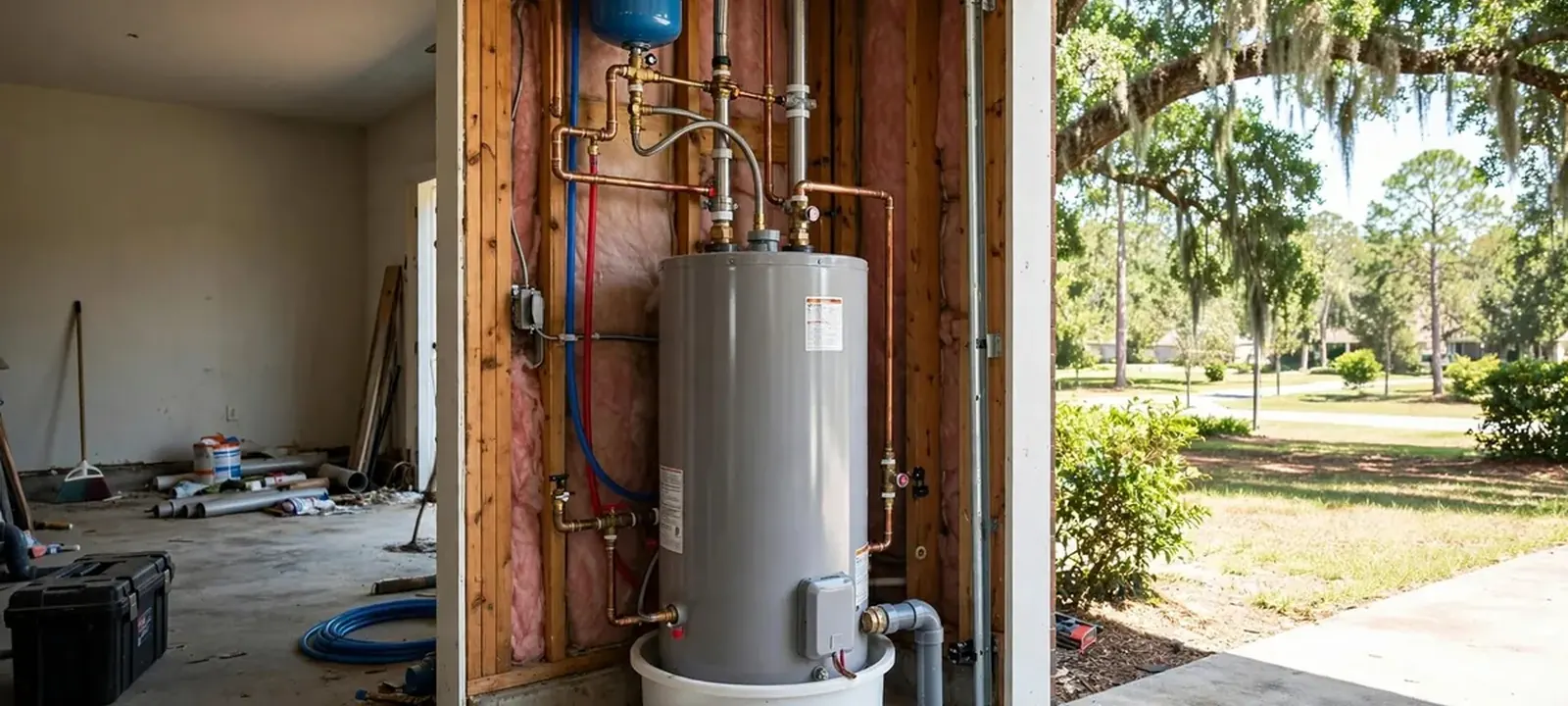
Replace a water heater when it reaches the end of its typical life and starts to show leaks, rust, loud noises, or repeat repairs. The US Department of Energy says most storage water heaters last 10 to 15 years, and tankless units can last more than 20.
Eagle Mountain homes are newer than most, so a 30-year-old heater would be a rarity here. You can still learn your heater's real age in two minutes by reading the serial number on its data plate. The age plus the symptoms decide whether you repair or replace.
Why a 30-year-old water heater is unlikely in Eagle Mountain
Articles about aging water heaters often picture a basement tank from the 1980s. That picture does not fit here. Eagle Mountain was incorporated in 1996, so even the oldest homes date to the late 1990s.
A heater that was never replaced in one of those homes would be close to 30 years old at the very oldest. Most have probably been swapped once already. The more useful question for your home is whether a 10 to 20 year old tank is nearing the end, and your serial number answers that.
How to read your water heater's age from the serial number
Find the data plate
Look for a silver or white sticker on the side of the tank, usually a few feet up from the floor. It lists the model, capacity, and serial number.
Locate the serial number
It is a string of letters and digits, often labeled SER or Serial No. Take a photo with your phone so you can zoom in.
Decode the date
Many brands start the serial number with a letter for the month and two digits for the year. Formats differ by brand and by year, so treat any pattern as a clue, not proof.
Confirm with the maker or a plumber
Manufacturers publish decoding guides, and a plumber who sees the model can usually read it on the spot. Remember the code shows when the tank was built, not the day it was installed.
Heater age and what it usually means
These bands are a rule of thumb built around the Department of Energy's 10 to 15 year range. A single unit can fall outside them.
| Tank age | Typical situation | Reasonable next step |
|---|---|---|
| Under 6 years | Failures are usually a part, not the tank | Repair the part and keep the heater |
| 6 to 10 years | Sediment and anode wear start to matter | Flush the tank and ask a plumber to check the anode rod |
| 10 to 15 years | Inside the normal lifespan window and closing fast | Budget for replacement and avoid pricey repairs |
| Over 15 years | Past the typical range for a storage tank | Replace at the first major fault, not after the leak |
| Any age with a wet tank body | The steel tank itself has failed | Replace now, since a leaking tank cannot be patched |
Six warning signs that a tank is on its way out
Age tells you when to start paying attention. These symptoms tell you the tank is actually failing.
Water at the base of the tank
A puddle may come from a fitting or from the tank seam. If the tank body is wet, the heater is done.
Rust-colored hot water
Brown water from only the hot taps points to corrosion inside the tank, not the pipes.
Rumbling or popping from the tank
Sediment trapped under the burner or element boils and pops. It wastes energy and stresses the tank floor.
Relief valve that drips
A dripping temperature and pressure relief valve can signal excess pressure or a worn valve. It needs a plumber soon.
Hot water runs out faster
A thick layer of sediment takes up room in the tank and leaves less space for heated water.
Repairs stacking up
A second or third repair in a short span means the heater is wearing out in several places at once.
Want a plumber to look at it?
Call the 24/7 line and describe what you see. A licensed plumber can tell you the next step.
Eagle Mountain note: newer homes, but permits still apply
Eagle Mountain was incorporated in 1996 with about 250 residents, became Eagle Mountain City in 2001, and passed 35,000 residents in a little over 20 years. The 2020 census counted 43,623. That growth means most local heaters are modern units on newer piping.
The city's list of work that requires a permit includes water heaters, unless the work is specifically exempted. Permit rules vary, so ask the Eagle Mountain Building Department at 801-789-6614 before replacing a tank.
What to do when a tank leaks, and why it cannot be repaired
A storage heater is a steel tank with a glass-like lining and a sacrificial anode rod that corrodes first to protect the steel. Once the anode is used up, rust begins to eat through the tank wall from the inside. Sealing the outside does nothing, because the damage is behind the insulation and the lining.
Leaks at a fitting, a drain valve, or a relief valve are different. Those are repairable, which is why a plumber checks exactly where the water comes from before giving a verdict.
If water is coming from the tank itself, switch off the power at the breaker or turn the gas control to pilot or off, then close the cold supply valve above the heater. Open a hot tap to relieve pressure and put a bucket under any drip. Then call the 24/7 line, because a tank that has started to leak through the wall will not stop.
Repair or replace: the deciding factors
Lean toward repair
- The tank is dry and the failed part is small
- The heater is under about 10 years old
- This is the first repair in a long time
- The tank lining and anode have been checked
Lean toward replacement
- Water is coming from the tank body
- The heater is at 10 to 15 years or beyond
- Repairs are repeating within a short span
- Venting or gas connections need corrections
Planned replacement versus waiting for the leak
A tank that fails in a utility closet or finished space can soak flooring and drywall before anyone notices. A planned swap lets you pick the model, schedule the work, and shut the water off on your terms. If your heater is in the replacement window, read through the water heater replacement process before it fails.
If the heater is younger and only a part has failed, a water heater repair visit may buy years of service. The plumber's job is to tell you honestly which side of the line you are on.
What to gather before a replacement visit
A few facts speed up the quote and let the plumber arrive with the right unit.
- A photo of the data plate with model, serial number, and capacity
- The fuel type, gas or electric
- Where the heater sits and how much clearance surrounds it
- How many people use hot water and how many bathrooms you have
- Any history of leaks, rust, or earlier repairs
- A note of whether you want to stay with a tank or consider tankless
Neighbors in nearby towns ask the same question
Saratoga Springs, about 10 miles away by estimate, has a similar mix of newer homes, and the same serial-number method works there. The Saratoga Springs plumber page covers how the same crews serve homes at the other end of Pony Express Parkway.
Whatever the town, the safe approach is the same: know the age, watch the symptoms, and plan before the tank gives out.
Questions readers ask
How long does a water heater last?
The US Department of Energy says most storage water heaters last 10 to 15 years, while tankless units can last more than 20. Water conditions, maintenance, and usage all shift those numbers.
Can I tell my heater's age without a serial number?
Sometimes. Check closing paperwork, a permit record, or a service sticker near the unit. The data plate is still the best source. If it is faded, a plumber may know the maker's date code from the model.
Should I replace a water heater before it leaks?
If it is past 10 to 15 years or showing rust, noise, or a dripping relief valve, planning ahead is wise. A planned swap avoids water damage and gives you time to choose the right size and type.
Is it worth flushing an old tank to extend its life?
A flush clears loose sediment and can help a tank in its middle years. On a very old tank, it may not extend life, and heavy sediment can make the drain valve clog. Ask a plumber to look first.
Do I need a permit to replace my water heater in Eagle Mountain?
The city's permit sheet lists water heaters as work that needs a permit unless specifically exempted. Rules vary by job, so ask the Eagle Mountain Building Department at 3267 E Campus Dr, Suite H, or call 801-789-6614 before the work starts.
Where the rules come from
This guide is general information and does not replace the code. Utah adopts the International Plumbing Code with its own amendments, so use the links below to check a license and to see which jobs Eagle Mountain says need a permit.