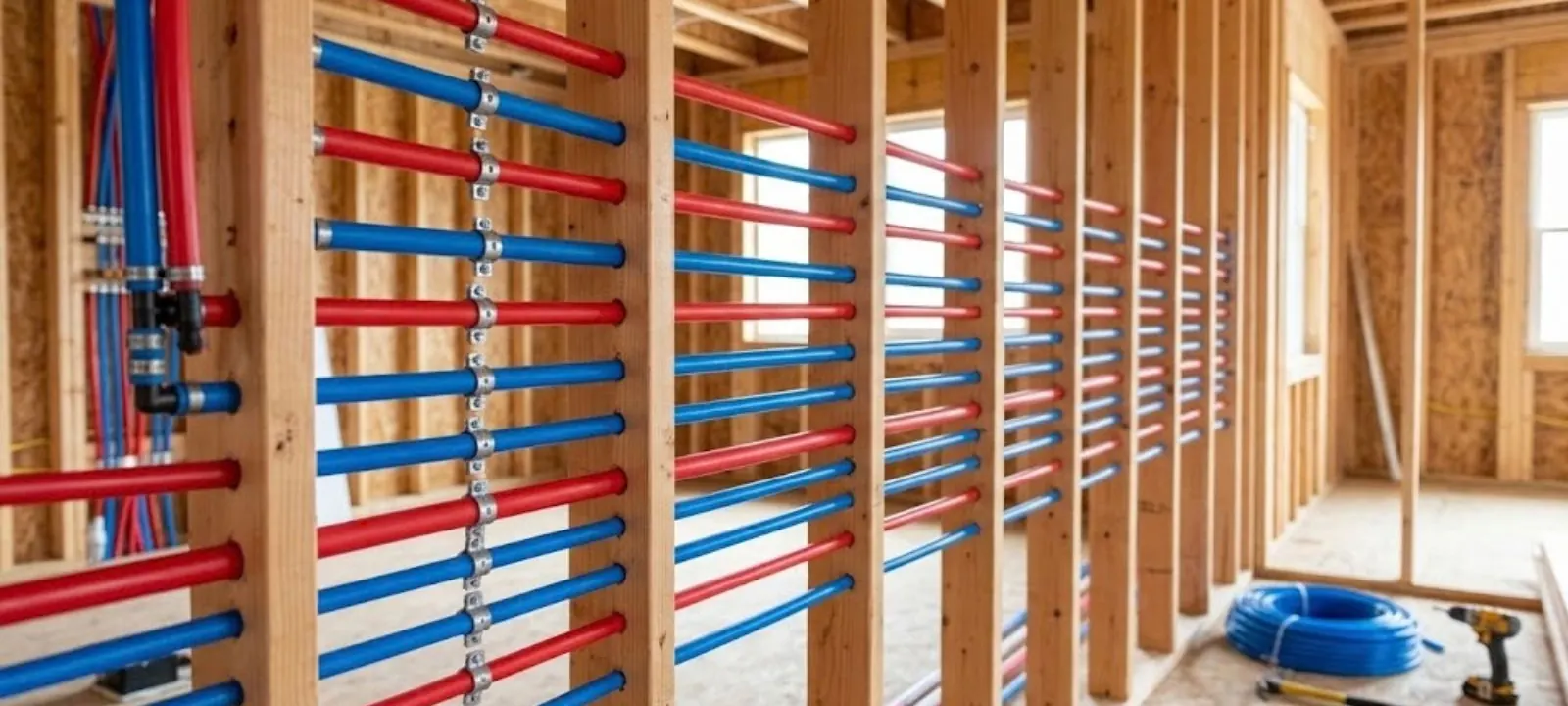
The cost to repipe a house depends on a handful of drivers. They are the pipe material, the number of fixtures and bathrooms, how hard the pipes are to reach, the number of stories, and the permit and wall repair work. Two homes of the same size can land far apart.
One honest point for Eagle Mountain, UT: most homes here were built since the late 1990s, so a full repipe is often not the first answer. A plumber should find out why the pipes are failing before quoting a whole house job.
Do newer Eagle Mountain homes even need repiping?
Repiping means replacing the supply lines that carry water to your faucets, showers, toilets, and appliances. In older cities, the reason is often galvanized steel or polybutylene that is wearing out. Eagle Mountain is a young city, so those materials are unlikely to be the cause here.
A home may still need a repipe after a pinhole leak pattern, a bad batch of fittings, a freeze event, or a past amateur remodel. A single failed section is often a spot repair, not a whole house project.
The cost drivers, ranked by how much they usually move the price
Every real number starts with these six factors, and each one can move the final quote up or down.
Pipe material
PEX, copper, and CPVC each differ in material price and labor method. Copper takes more time to solder, while PEX is flexible and often faster to run.
Size and fixture count
More bathrooms, a kitchen island sink, a laundry room, and outdoor hose bibs mean more pipe and more connections.
Access
Open attic space and an unfinished basement keep labor lower. Pipes behind finished drywall or under a slab cost more to reach.
Stories and layout
A two story home needs vertical runs through walls. A long, spread out floor plan needs longer horizontal runs.
Drywall and finish repair
Opening walls means patching, texture, and paint. Some contractors include this and some leave it to you, so ask which.
Permits and inspections
Water supply piping is on the city permit list, so a permit and inspection step is usually part of the job.
Pipe materials compared by what drives labor and long-term fit
This table covers how each material affects the job, not what it costs.
| Material | How it installs | Trade-off to weigh |
|---|---|---|
| PEX | Flexible tubing run in long sections with crimp or expansion fittings | Needs protection from sunlight and sharp edges |
| Copper | Rigid pipe joined by soldering | Slower to install and a fire safety factor during soldering |
| CPVC | Rigid plastic glued at joints | Can turn brittle with age and heat in some conditions |
| Mixed repair | Short sections swapped inside an older system | Different metals can corrode where they meet |
How a quote usually gets built
Walk the house
The plumber counts fixtures, finds the water heater and main shutoff, and checks where pipes run. This visit sets the base scope.
Check access
Attic hatches, crawlspaces, and basement ceilings get a look. Slab homes get a different plan from basement homes.
Test the water system
Pressure, visible corrosion, and leak history help decide between spot repair and a full repipe.
Add permit and repair work
The quote should state who pulls the permit, who patches drywall, and how long water will be off each day.
Want a plumber to look at it?
Call the 24/7 line and describe what you see. A licensed plumber can tell you the next step.
Eagle Mountain note: a young city changes the repipe question
Eagle Mountain was incorporated in 1996 and renamed Eagle Mountain City in 2001, with a 2020 census count of 43,623. Most homes here date from the late 1990s forward, so failures tend to come from specific events, not from decades-old pipe. That is why a diagnosis should come before a whole house quote.
The city's permit sheet lists water supply piping among the work that needs a permit unless it is specifically exempted. Permit rules vary, so ask the Eagle Mountain Building Department at 801-789-6614. You can also check any plumber's license with the Verify a License lookup from Utah's Division of Professional Licensing.
Pinhole leaks and low pressure: when people start asking about repiping
Homeowners often describe the problem as a pinhole leak that keeps coming back, brown water from the tap, or weak flow at the far bathroom. Those symptoms can mean a failing pipe, but they can also mean a bad pressure regulator, a clogged filter, or a sediment-laden water heater.
Spot repair for a single leak may cost far less than a full repipe, so ask a plumber to explain the evidence. A second opinion is reasonable before work that opens most of your walls. A leak detection visit can show whether the damage is limited or spread out.
Why your water chemistry matters more than the pipe's age
Pipe failure depends on both the material and the water that runs through it. Aggressive water can pit copper from the inside, and chlorine can age some plastics. Because Eagle Mountain's water report does not publish a hardness number, a home test kit or a lab test of your tap gives you data about your own supply before you pick a material.
Questions to ask every repipe bidder
Use the same questions with each company so the quotes compare fairly.
- Which pipe material will you use, and why?
- Who pulls the permit and schedules the inspection?
- How many days will the water be off?
- Who patches and paints the drywall?
- What happens to the old pipes?
- Is the water heater connection included?
- Can you show me your Utah plumbing license in the state lookup?
Spot repair versus full repipe
A spot repair may fit
- One failed fitting or section
- A freeze break in one wall
- Leaks traced to a single manifold
- A home built with modern pipe
A full repipe may fit
- Repeated pinholes in different rooms
- Known problem pipe throughout the house
- Widespread corrosion visible at fittings
- Plans to open walls anyway for a remodel
What to expect while the water is off
A whole house repipe usually takes more than a day, and your water will be off for part of each one. Plan for showers, laundry, and cooking around that. Ask the plumber for a daily schedule before work begins.
Ask whether the crew will cap lines at the water heater and test the system under pressure before closing walls. A pressure test before drywall goes back catches a leaky fitting while it is still easy to reach. Keep a copy of the permit and inspection sign-off with your home records.
For the planned side of the project, see our repiping service page. Homeowners near Redwood Road can also reach us through the Saratoga Springs plumber page.
Questions readers ask
Can you tell me the cost to repipe my house without seeing it?
No. A real number needs a walk through that counts fixtures, checks access, and looks at your pipe. Call (385) 488-1892 and we can explain what the visit covers.
Does repiping add value to a home?
It can help a sale if the home had pipe problems, because a buyer sees fewer unknowns. It rarely adds the full amount spent, so treat it as a repair, not an upgrade.
Which pipe material is best?
There is no single best. PEX is common for flexibility and speed, copper has a long track record, and CPVC fits some budgets. The right pick depends on your water and your house.
Will repiping make my water pressure better?
It can if the old pipe was restricted by buildup. If the pressure issue comes from the regulator or the city supply, new pipe will not change it.
Do I need to move out during a repipe?
Usually not, but the water will be off for part of each work day. Plan for alternate toilets and showers during that time.
Should an Eagle Mountain, UT homeowner worry about old galvanized pipe?
Probably not. The city grew mostly after the late 1990s, so galvanized steel is unlikely in most homes here. Look for the real cause of the problem, such as a failed fitting or freeze damage, before assuming a repipe.
Where the rules come from
This guide is general information and does not replace the code. Utah adopts the International Plumbing Code with its own amendments, so use the links below to check a license and to see which jobs Eagle Mountain says need a permit.