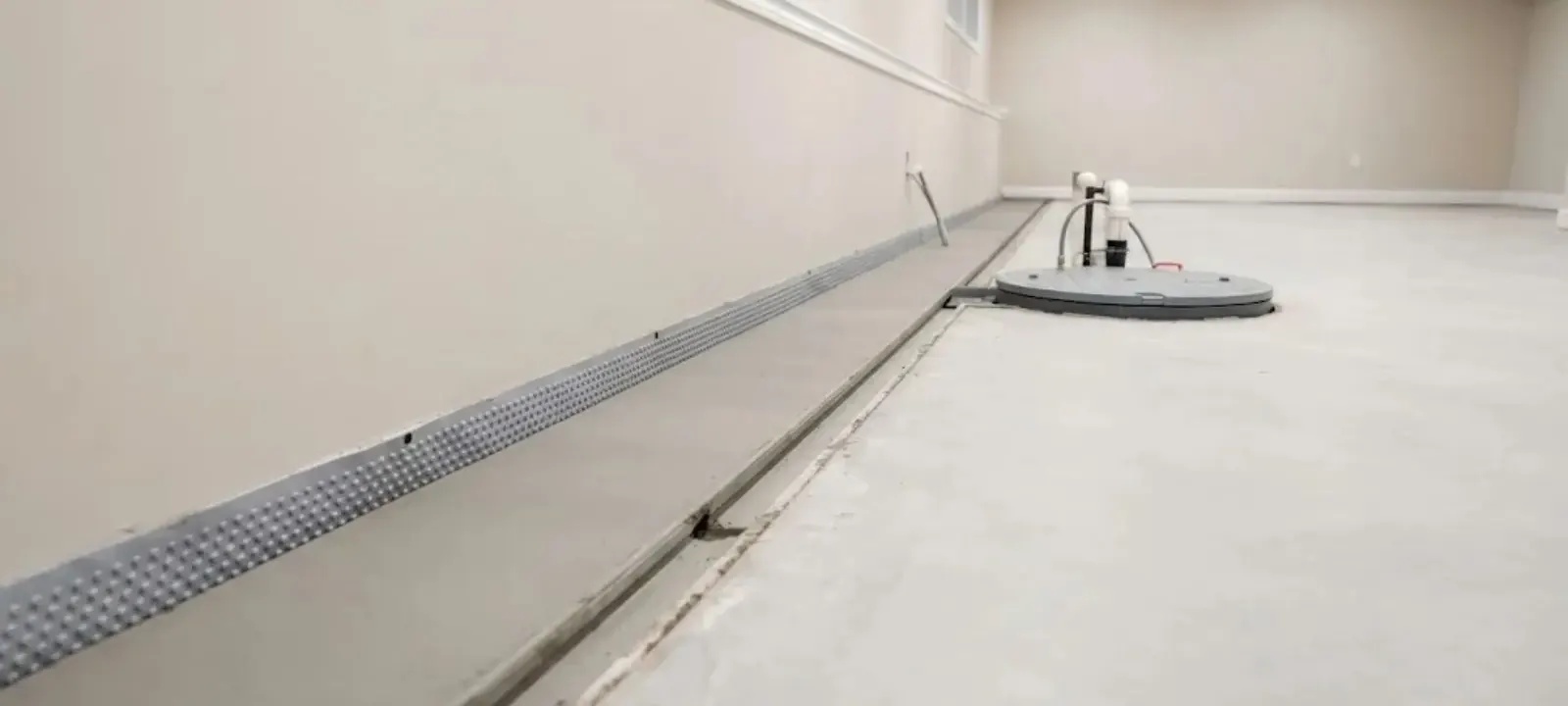
Interior basement waterproofing cost depends mainly on how many linear feet of wall need treatment, whether a drain channel and sump pit are needed, how the water gets in, and how much finished space must be opened up. The same house can need a small crack repair or a full perimeter system.
In Eagle Mountain, UT, a plumber cannot name a fair price without finding the source first. A site visit that traces where the water enters is the step that sets the scope.
What waterproofing from the inside really means
Interior waterproofing manages water that has already reached your basement wall or floor. It does not stop water outside. A typical system collects it and sends it to a sump pit, where a pump moves it away from the house.
Exterior work digs around the foundation and seals the wall from outside. Interior work happens inside the basement and is usually less disruptive to the yard, though it may mean cutting into the floor.
Six things that usually decide the quote
These factors are why two quotes for the same house can differ.
Linear feet treated
A single wall costs less to treat than the full perimeter. The longer the run of drain channel, the more labor and material.
Source of the water
Wall cracks, floor joint seepage, window wells, and plumbing leaks need different fixes. A wrong diagnosis wastes money.
Drain channel and sump pit
If a system is needed, the crew may cut a trench in the slab, lay perforated pipe, and set a pit. Concrete cutting and patching add labor.
Pump count and backup
One pump may do the job, or the plan may add a second pump or a battery backup. That choice changes the price.
Permits, electrical, and prep
A pump needs power, and some work may require a permit or inspection. Ask the Building Department what applies. Wall surfaces with flaking paint or old sealers also need prep before anything bonds.
Permits and electrical
A pump needs power, and some work may require a permit or inspection. Ask the Building Department what applies.
Which fix matches which problem
Use this as a conversation guide, not a diagnosis. A visit confirms the real cause.
Ask the bidder to point to the exact cause on your own walls. A quote that never names a source is a quote for a guess.
| What you notice | Possible cause | Interior fix that might apply |
|---|---|---|
| A single hairline wall crack that weeps | Foundation shrinkage or settlement | Crack injection with epoxy or polyurethane, if the crack is stable |
| Dampness along the floor and wall joint | Water pushing through the cove joint | Perimeter drain channel to a sump pit |
| White powder on concrete | Mineral salts left by moisture passing through | Surface prep and a masonry sealer, plus finding the water source |
| Musty smell with no visible water | Humidity or a hidden leak | Dehumidifier, vapor barrier, and a leak check |
| Water at a window well | Poor drainage around the well | Clean and grade the well, add a cover or drain |
Wet basement after rain or snowmelt: what to figure out first
People often describe the problem as water coming in only during storms, or damp walls every spring. Timing is a useful clue. Water that appears right after rain may point to surface drainage, while a steady damp spot may point to a plumbing leak.
Before you accept any waterproofing plan, rule out the simple causes. Check gutters and downspouts, how the ground slopes near the foundation, and window wells. A supply line leak behind a wall can mimic seepage, and a basement waterproofing visit should include that check.
Keep a log for a month if you can. Write down the date, the weather, and where the damp spot appeared, because a pattern helps any contractor price the right fix and not the biggest one.
Want a plumber to look at it?
Call the 24/7 line and describe what you see. A licensed plumber can tell you the next step.
Eagle Mountain note: permits, utilities, and what to verify locally
Eagle Mountain's permit sheet lists drain-waste-vent systems, sewer connections, and major plumbing repairs among the work that needs a permit unless it is specifically exempted. Permit rules vary, so ask the Eagle Mountain Building Department at 801-789-6614 whether a sump line or drain tie-in on your project needs one.
Call 811 (Blue Stakes of Utah) before any digging outside, including for a discharge line. We do not state local soil or groundwater conditions here, because we have not verified them from a primary source. A trace of the water at your own house will tell you more than a general claim.
How a waterproofing estimate gets built
Trace the water
The plumber looks at wall cracks, floor joints, and window wells, and notes moisture readings. This step names the source.
Measure the affected walls
Linear footage of wall or perimeter sets the base scope for any drain channel or sealing work.
Choose the system
The options might include crack injection, a drain channel, a sump pit and pump, or a mix. Each has trade-offs the plumber should explain.
Plan the finish work
The quote should say who patches the concrete, who handles drywall, and how the discharge line will be routed away from the foundation.
Interior drain system versus crack repair alone
Crack repair alone may fit
- One or two stable cracks
- Seepage that follows a clear path
- No standing water on the floor
- A small budget and a limited scope
- A bare concrete wall with easy access
A drain system may fit
- Dampness along much of the wall base
- Repeat water after storms
- Water coming through the floor joint
- Plans to finish the basement later
- A finished room where the wall must be opened
Why the pump discharge deserves as much thought as the pit
A sump pit collects water, but the pump has to send it somewhere useful. Discharge that drains right back to the foundation recirculates the same water. Ask where the line will exit, how far from the house, and whether the outlet could freeze in winter. A bad discharge plan can undo a good drain system, and a sound one often decides whether the system keeps working.
What to document before you call anyone
Good notes make a visit faster and help you compare bids.
- Photos of every wet spot, with a coin for scale
- The dates when water appeared and the weather that week
- A list of what is stored or finished along the walls
- Your gutter and downspout layout
- Whether a sump pit already exists
- Any past repairs or sealers
- Your insurance policy language on water damage
Why the sump pump is part of the price conversation
Most interior systems end at a pump. The pump is the part that keeps working, so its quality, backup, and discharge line matter. Ask what model the plumber would use and how the power backup works.
Our sump pump service page covers replacement and repair if you already have a pit. If you live near the Saratoga Springs border, the Saratoga Springs plumbing page may be the closest option.
Questions readers ask
Is interior waterproofing cheaper than exterior?
It can be, because it avoids digging up the foundation, but the answer depends on the scope. Exterior work protects the wall itself, while interior work manages water after it arrives.
Can I waterproof a basement myself?
Surface sealers are a common do-it-yourself task. Drain channels and sump pits involve cutting concrete and electrical work, so many homeowners hire a pro.
Does a damp smell mean I need waterproofing?
Not always. Humidity, a plumbing leak, or poor ventilation can cause the same smell. Trace the moisture before you buy a system.
Will insurance pay for waterproofing?
Policies differ. Many treat sudden pipe breaks differently from groundwater seepage, so read your policy and ask your insurer.
How long does an interior system take to install?
It depends on the footage, the slab, and the finish work. Ask the crew for a day by day plan before you agree.
What should an Eagle Mountain, UT homeowner ask a waterproofing bidder first?
Ask how they traced the water source at your house and what permit applies. Then call (385) 488-1892 if you want a plumber to check for a supply or drain leak before committing to a system.
Where the rules come from
This guide is general information and does not replace the code. Utah adopts the International Plumbing Code with its own amendments, so use the links below to check a license and to see which jobs Eagle Mountain says need a permit.