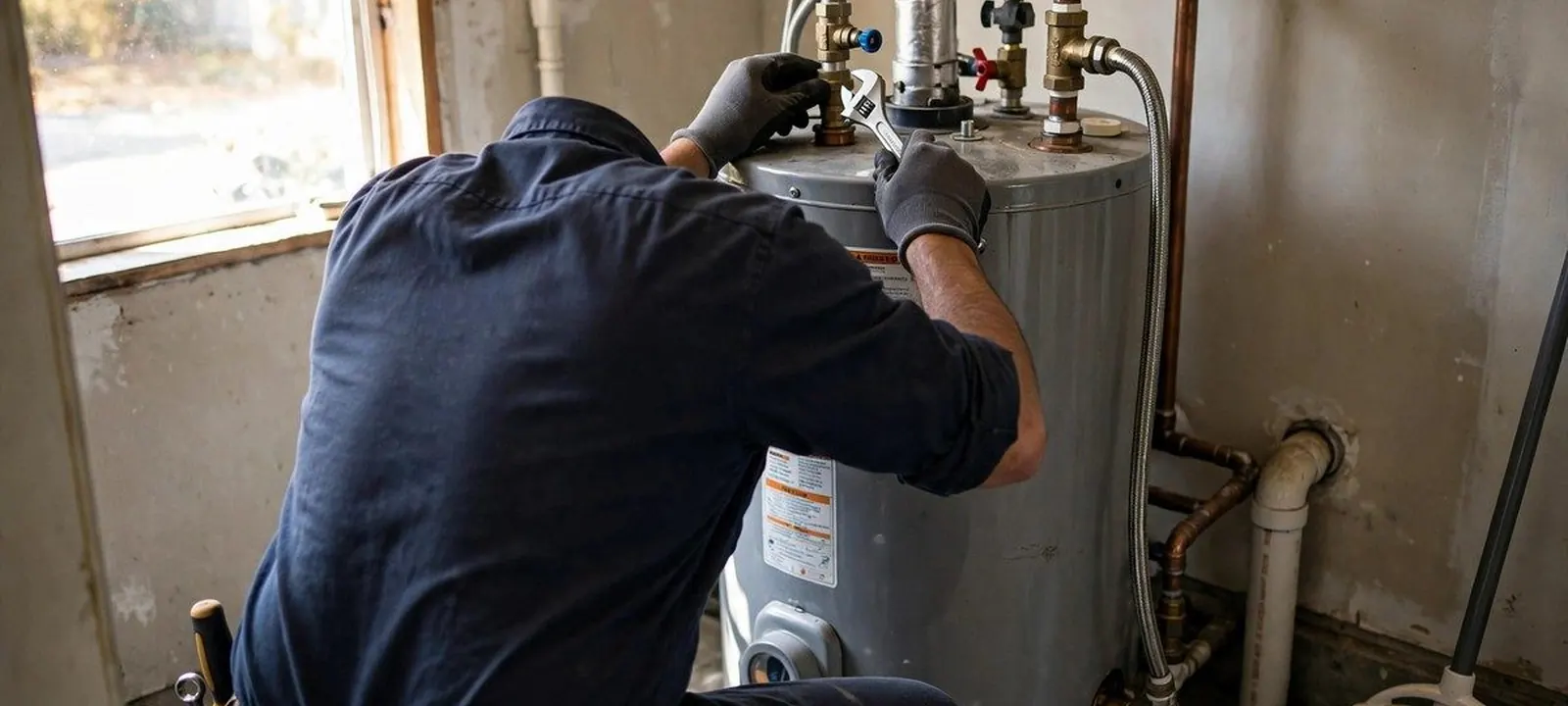
Gas water heater repair cost in Eagle Mountain, UT depends on four things: which part failed, how hard the heater is to reach, whether the work needs a permit, and when you call. A thermocouple swap is a short visit. A leaking tank cannot be repaired at all, so that job becomes a replacement decision.
This page lists no prices because the real number depends on your model and your symptoms. Call (385) 488-1892, describe what the heater is doing, and a plumber can explain the work before it starts. One rule comes first. If you smell gas, leave the home and call 911 or the gas utility before you call anyone else.
If you smell gas, leave before you read anything else
A rotten-egg smell near a gas water heater is a safety problem, not a repair question. No plumber's schedule matters more than getting everyone out of the building.
- Walk everyone and the pets outside right away.
- Do not flip light switches, plug in devices, or start a car in an attached garage.
- Call 911 or the gas utility from outside, away from the house.
- Do not try to relight the pilot or shut off the heater yourself.
- Wait for the gas utility or fire crew to clear the home before you go back in.
Why two heaters with the same symptom can get very different bills
Two neighbors can both say they have no hot water, and one fix takes twenty minutes while the other takes an afternoon. The symptom only tells a plumber where to start looking. The price follows the part, the labor, and the conditions around the heater.
A gas heater has more moving pieces than an electric one. It has a burner, a pilot or igniter, a safety sensor, a gas control valve, and a flue that carries exhaust outside. Each piece fails in its own way and costs a different amount to replace.
Labor changes too. A heater in an open garage is quick to reach. One boxed into a hall closet with a tight flue path takes longer to work on safely.
Six common gas heater repairs and what makes each one bigger or smaller
Most gas heater repairs fall into a short list. The part sets the starting point, and the conditions below it push the job up or down.
Thermocouple or thermopile
This sensor tells the gas valve the pilot is lit. The part itself is small, so cost depends mostly on how easy the pilot assembly is to reach.
Gas control valve
The valve is the brain of the heater, so it costs more than a sensor. Brand and model decide whether the right valve is on a truck or has to be ordered.
Burner and igniter
Soot, rust flakes, or a cracked igniter can stop ignition. A cleaning is lighter work than a full burner replacement.
Flue and draft hood
A weak draft can push exhaust gases back into the room. Venting repairs involve safety checks, so they take longer than a quick part swap.
Anode rod and relief valve
A worn anode rod lets the tank rust sooner. A temperature and pressure relief valve that drips needs prompt attention because it protects the tank.
Sediment buildup
Mineral grit settles in the bottom of the tank and causes popping noises. A flush is routine, but a heater packed with sediment may not drain cleanly.
Symptom, likely part, and what moves the cost
Use this table as a rough map, not a diagnosis. A plumber confirms the cause with a gas test and a look at the burner.
| What you notice | Likely part | What moves the cost |
|---|---|---|
| Pilot keeps going out | Thermocouple, thermopile, or pilot assembly | Reach to the pilot tube and whether the gas valve is also worn |
| Water is lukewarm only | Burner, igniter, or gas control valve | Valve brand, parts stock, and the time spent testing |
| Popping or rumbling noise | Sediment in the tank | How full of sediment the tank is and whether the drain valve works |
| Water around the base | Fittings, relief valve, or the tank itself | A fitting is a repair. A tank leak means replacement |
| Exhaust smell or soot on the flue | Draft hood, flue, or burner | Venting length, access, and any code corrections found |
The five cost drivers behind any quote
When a plumber hands you a number, five things sit underneath it. Knowing them helps you compare two quotes fairly.
Whether a repair needs a permit depends on the work. Replacing a part is usually different from replacing the heater, so ask the city before assuming either way.
Want your real number? Call (385) 488-1892 and a plumber will walk through your heater's symptoms with you.
Want a plumber to look at it?
Call the 24/7 line and describe what you see. A licensed plumber can tell you the next step.
Eagle Mountain note: check permits before you assume a repair is exempt
The City of Eagle Mountain publishes a sheet of work that requires a permit. It lists water heaters, major plumbing repairs, and new gas piping, extensions, or meter work, unless the work is specifically exempted. Many minor repairs and ordinary maintenance can be exempt.
That means a simple part swap and a full heater replacement may be treated differently. Permit rules vary, so ask the Eagle Mountain Building Department at 3267 E Campus Dr, Suite H, or call 801-789-6614 before you schedule bigger work.
Utah winters bring hard freezes. A heater in an unheated garage works harder in cold months, and that is worth mentioning when you describe symptoms.
How a gas heater repair visit usually runs
Safety check first
The plumber tests for gas around the heater and checks the flue draft before touching any parts. A gas leak or poor draft changes the whole plan.
Find the failed part
The plumber watches the heater light, checks the flame, and tests the thermocouple and control valve. This is where a sooty burner or a weak igniter shows up.
Explain the options and the price
You should hear the part name, the labor involved, and whether the tank is sound. You approve the price before any work starts.
Repair, relight, and test
After the repair, the plumber relights the unit, checks the flame, and confirms the venting still pulls exhaust outside.
Repair it or replace it when the tank is the problem
Repair makes sense when
- A single small part such as a sensor or igniter has failed
- The tank is dry outside and shows no rust at the seams
- The heater is well inside its normal lifespan
- The same fault has not come back repeatedly
Replacement makes sense when
- Water is seeping from the tank body or the lower seam
- Repairs keep stacking up within a short period
- The heater is at or beyond its typical lifespan
- The venting or gas connection needs major correction
What to have ready before you call a plumber
A clear description saves diagnostic time. Gather these details first and the first phone call goes much further.
- The make, model, and capacity printed on the data plate
- Whether the pilot is lit, flickering, or out
- Any popping, rumbling, or hissing sounds and when they happen
- Water around the base, on the floor, or dripping from the discharge pipe
- Where the heater sits and how clear the space around it is
- Any recent work on the home, such as a remodel or new appliance
Why a good quote names the part and the safety test
A fair quote says which part failed, what the repair involves, and whether the plumber checked for gas and draft. A vague line such as repair heater tells you nothing you can compare.
Ask what happens if the part turns out to be the wrong one, and whether the tank is sound enough to justify the repair. Both answers reveal how carefully the plumber looked.
If you call from outside the main town, tell the dispatcher your street. Crews also serve nearby towns, including the homes covered by our Saratoga Springs plumbing page.
Where to read more about the two paths from here
If the heater is repairable, a standard visit with the right part usually restores hot water the same day. You can read how that work runs on the water heater repair page.
If the tank is the failure, the question becomes which new heater fits your household. The water heater replacement page covers sizing, venting, and what the install involves.
Questions readers ask
Why is my gas water heater pilot light always going out?
The usual causes are a worn thermocouple, a dirty pilot tube, or a draft pushing the flame out. A plumber tests the sensor and the draft before replacing anything, because swapping a part that is not the problem wastes the visit.
Is it worth repairing a gas water heater that is more than ten years old?
It depends on the tank, not the part. The US Department of Energy says most storage water heaters last 10 to 15 years. If the tank is dry and sound, a small repair can make sense. If it leaks or is rusted at the seams, replacement is the safer choice.
Can I flush a gas water heater myself to cut down on repair costs?
Draining a few gallons from the tank drain valve is ordinary maintenance for many homeowners. Turn the gas control to pilot or off first, let the water cool, and run the hose to a safe drain. If the valve clogs with grit or will not close, stop and call a plumber.
What should I do if I smell gas near my water heater?
Leave the home with everyone inside, then call 911 or the gas utility from outside. Do not use switches, do not relight the pilot, and do not call a plumber first. A plumber can help once the gas utility says the home is safe.
How much does a night or weekend heater repair cost compared to a weekday booking?
Night and weekend dispatches usually cost more because they pull crews off a normal schedule. If you have a safe workaround such as a space heater for a short time, a same-day appointment when available is often the cheaper route. Call (385) 488-1892 to compare both options.
Where do I ask whether my Eagle Mountain water heater repair needs a permit?
Ask the Eagle Mountain Building Department at 3267 E Campus Dr, Suite H, or call 801-789-6614. The city's permit sheet lists water heaters and gas work but also exempts many minor repairs, so describe the exact job. Permit rules vary, so get the answer before work begins.
Where the rules come from
This guide is general information and does not replace the code. Utah adopts the International Plumbing Code with its own amendments, so use the links below to check a license and to see which jobs Eagle Mountain says need a permit.